Charge What You're Worth: A Guide for Women Entrepreneurs

TL;DR:
- Women entrepreneurs frequently underprice their services by 20-30% due to social conditioning and mindset barriers.
- Adopting value-based pricing based on client outcomes can significantly increase revenue and reduce burnout.
- Building confidence, clear frameworks, and market evidence are key to overcoming fears and communicating higher rates effectively.
Women entrepreneurs are leaving serious money on the table every single day. Research shows that women underprice by 20-30% compared to their male counterparts, and this gap is not simply about confidence. It runs deeper, woven into social conditioning, nervous system patterns, and myths about what “good” pricing looks like. If you have already built a revenue-generating business and still feel the sting of undercharging, this guide is for you. We will walk through the real reasons behind the pattern, a smarter pricing model, practical frameworks for setting and communicating rates, and the mindset shifts that make it all stick.
Table of Contents
- Why women entrepreneurs undercharge—and how it holds your business back
- Value-based pricing: The sustainable solution to undercharging
- Practical frameworks: Calculating and communicating your value
- Mindset mastery: Overcoming fear, perfectionism, and client objections
- Why charging your worth isn’t about you—it’s about the value you create
- Ready to price with confidence and grow sustainably?
- Frequently asked questions
Key Takeaways
| Point | Details |
|---|---|
| Women often underprice | Most women entrepreneurs charge 20-30% less for equivalent work, limiting their growth and business sustainability. |
| Value-based pricing unlocks growth | Charging based on results, not hours, can multiply your revenue and attract higher-quality clients. |
| Practical frameworks boost confidence | Use structured pricing strategies and clear communication scripts to set and defend premium rates. |
| Mindset shifts are crucial | Overcoming perfectionism, fear, and boundaries leads to lasting confidence in your pricing. |
| Detaching self-worth from pricing | True pricing power comes from focusing on value delivered, not personal identity. |
Why women entrepreneurs undercharge—and how it holds your business back
The underpricing gap is real, and it shows up in hard numbers. Freelance men charge 48% more per hour than women on average. That is not a small difference. Over a year, that gap can translate into tens of thousands of dollars in lost revenue. And the ripple effects do not stop at your bank account. Chronic underpricing limits how much you can invest in your team, your systems, and your own growth.
So why does this keep happening to smart, capable women? The causes are systemic and psychological, not personal failures. Imposter syndrome is one of the biggest culprits. It whispers that you have not earned the right to charge more, even when your results say otherwise. Add social conditioning that teaches women to minimize, accommodate, and avoid seeming “too much,” and you have a recipe for perpetual discounting.
Here are the most common mindsets holding women back:
- “I am not experienced enough yet to charge that.”
- “What if they say no and I lose the client entirely?”
- “I should wait until I am perfect before raising prices.”
- “Being affordable makes me more accessible and kind.”
- “Other women in my space charge less, so I should too.”
These beliefs feel protective, but they actively sabotage your revenue and your brand positioning.
The financial picture is sobering. 88% of women-owned businesses generate less than $100,000 per year. That statistic is not a reflection of capability or work ethic. It is a pricing problem masquerading as a strategy problem.
“When you undercharge, you don’t just lose money. You attract clients who don’t value your work, which makes every project harder and every result less visible.”
The data table below illustrates how pricing gaps compound over time:
| Scenario | Monthly clients | Rate per project | Monthly revenue |
|---|---|---|---|
| Underpriced | 5 | $500 | $2,500 |
| Market rate | 5 | $750 | $3,750 |
| Value-based | 5 | $1,500 | $7,500 |
Learning pricing services strategies that break this cycle starts with understanding the root causes. Once you see them clearly, the path forward becomes a lot less foggy. And understanding pricing for profit strategies means you stop leaving money on the table month after month.
Value-based pricing: The sustainable solution to undercharging
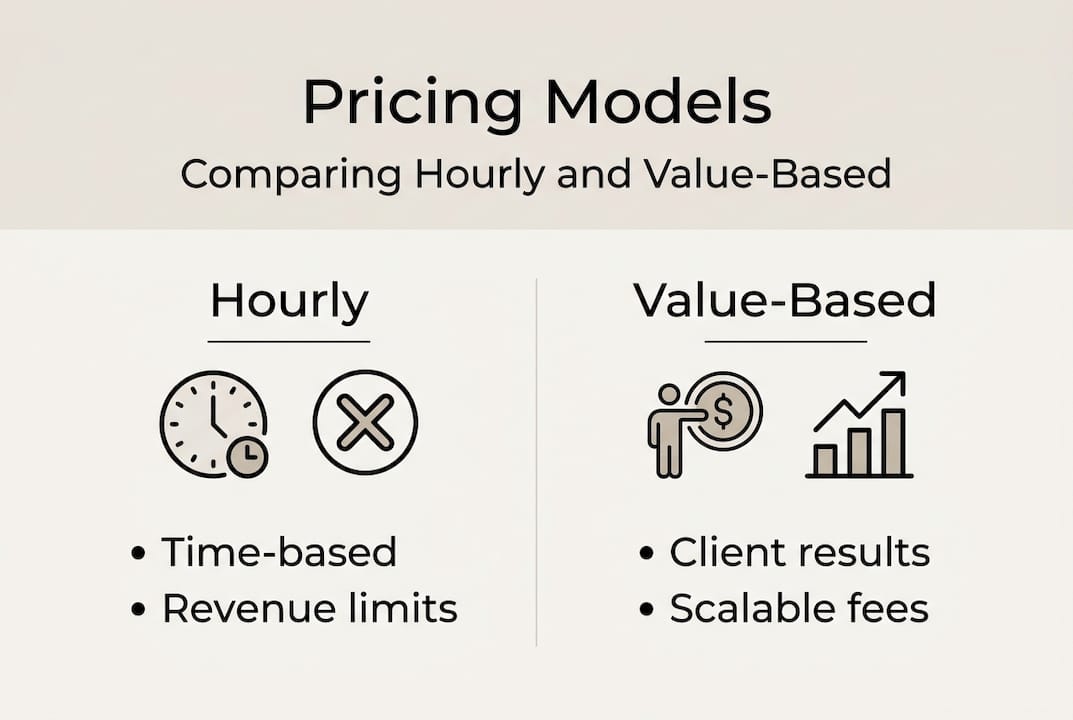
Most women entrepreneurs start out pricing by the hour or by task. It feels logical. You trade time for money, the client knows exactly what they are paying for, and everyone understands the math. The problem is that this model has a hard ceiling. You only have so many hours. More clients means more work, not more freedom.
Value-based pricing flips the model entirely. Instead of pricing based on what you do, you price based on what the client gets. The ROI, the transformation, the outcome. Following minimum profitable rate guidelines is a strong starting point, but the real shift is thinking in terms of impact.

Here is a clear side-by-side comparison:
| Pricing model | Basis | Example | Revenue ceiling |
|---|---|---|---|
| Hourly | Time | $75/hr x 10 hrs = $750 | Yes, tied to hours |
| Project-based | Input | Flat $1,200 per project | Moderate, tied to scope |
| Value-based | Outcome | $5,000 for a strategy that adds $20K | No ceiling |
The numbers speak for themselves. Value-based pricing can lift revenue by several multiples for the same work. The classic example: charging $3,000 for a project that delivers $10,000 in client value is not overcharging. It is accurate pricing.
Here are the key steps to adopt value-based pricing in your business:
- Identify the specific outcome or result your work delivers.
- Research what that result is worth to your ideal client financially.
- Set your price as a percentage of the value you create.
- Build your offer around the transformation, not the tasks.
- Test your new price with the next three prospects and track response.
This model also solves the burnout problem. When you charge based on scaling revenue with pricing and outcomes rather than hours, you are rewarded for being more efficient, not punished for it. Fewer clients at higher rates means more time to deliver exceptional results and actually rest. That is what sustainable profit pricing looks like in practice.
Practical frameworks: Calculating and communicating your value
Knowing you should charge more is not enough. You need a system. Start with the basics: calculate your actual costs, add a minimum 30% profit margin, and then audit that number against what male peers in your industry charge. That audit is often uncomfortable and always illuminating.
Here is a checklist to build your pricing foundation:
- Calculate your true cost of delivery (time, tools, overhead, taxes)
- Define your unique value proposition clearly in one sentence
- Research what three male competitors in your niche charge for similar work
- Map out two to three tiered pricing strategies that give clients options
- Set a firm policy: no discounts without a corresponding reduction in scope
Following steps for value-based pricing means starting with a minimum floor, defining your unique value proposition, creating tiers, and then testing and iterating. The iteration part is critical. Pricing is not a one-time decision.
Once your price is set, communicating it confidently is where many women freeze. Here are three steps that help:
- Lead with the outcome, not the deliverable. “This will position you to close 30% more consulting clients” lands better than “I will write you five blog posts.”
- State your rate clearly and then stop talking. Silence after quoting a price is not awkward. It is professional.
- Respond to objections with curiosity. “What would make this feel like a no-brainer investment for you?” opens dialogue without collapsing your price.
Pro Tip: Never discount in the moment. If a client pushes back on price, your standard response is: “I appreciate you sharing that. My rates are set to reflect the results I deliver. I am happy to adjust the scope if that helps the budget work.” Protecting your rate protects your brand.
For women building service pricing frameworks from scratch or upgrading existing ones, the framework matters as much as the number. And if you are scaling consulting pricing, structure becomes everything. Reviewing your pricing weekly helps you catch drift before it becomes a pattern.
Mindset mastery: Overcoming fear, perfectionism, and client objections
Here is a number that stops most people cold. 92% of solopreneurs want to charge more, but the main barrier is not confidence. It is a perceived lack of demand. That reframing matters. It means the work is less about building self-esteem and more about building evidence that the market supports your higher rate.
The most common mindset traps that keep women undercharging include:
- Perfectionism: waiting to raise prices until the offer is flawless
- Fear of demand drop: believing higher prices will empty your pipeline
- The “Midwest nice” effect: feeling that charging more is greedy or unfair
- Habitual discounting: automatically offering deals to avoid negotiation
- Over-explaining your price as if it requires justification
Reframing sales as service is one of the most powerful shifts you can make. When you genuinely believe your offer creates real value, presenting your price is an act of generosity, not aggression. You are giving someone access to a result they need.
“Your price is a signal. Higher prices attract clients who are serious, committed, and ready to do the work with you. Low prices do the opposite.”
Pro Tip: Use AI tools to rehearse negotiations and practice responding to objections. Role-playing with a tool like ChatGPT before a real sales conversation wires new response patterns into your nervous system, so you do not default to discounting under pressure.
On pro bono and discount requests: have a policy before the conversation happens. Decide in advance what percentage of your work, if any, you will give at reduced rates and under what conditions. Clients who chronically push for discounts consistently take more of your time and energy than full-paying clients. That is not a theory. It is something every experienced service provider will confirm.
For deeper work on fostering pricing confidence, the internal shifts and the external systems need to move together.
Why charging your worth isn’t about you—it’s about the value you create
Here is something the “charge your worth” conversation often gets wrong. Some pricing experts warn that tying the phrase to personal worth conflates your identity with customer-perceived value. And they have a point. When your price is about you, every rejection feels personal. Every negotiation threatens your self-concept.
The more sustainable frame is this: your price is about what you create for the client, not about how deserving you feel on any given day. The market does not care about your imposter syndrome. It responds to evidence of results.
We have seen this play out across thousands of conversations at Freedom Sun. Women who raise their prices and ground that decision in data and client outcomes do not experience the same emotional volatility as women who raise prices based solely on mindset work. Both matter. But the business case comes first.
Higher prices also change your brand’s gravitational pull. Premium pricing attracts clients who are already bought in, who follow through, and who generate your best case studies. That creates a compounding effect. Better clients lead to better results, which justify even higher pricing services overview in the next cycle.
Sustainable progress comes from market testing and trusted frameworks, not personal willpower alone. Build the evidence. Let the market confirm your value. Then raise the price again.
Ready to price with confidence and grow sustainably?
If this article sparked something for you, do not let it stop at insight. The women who actually shift their pricing do one concrete thing before the week ends. They review their current rates, identify one offer that is clearly underpriced, and commit to a specific new number.
At Freedom Sun, we work with women entrepreneurs who are already generating revenue and ready to build real wealth without burning out. From foundational startup pricing strategies to advanced pricing for profit guides, our frameworks are built on nearly 20 years of financial strategy and deep understanding of the psychology underneath every pricing decision. The next step is yours. Review your pricing, find your peer community, and make one shift this month.
Frequently asked questions
How do I know if I’m undercharging for my services?
Compare your rates to industry peers and check if women in your niche are charging 20-30% less than men for equivalent work. If they are, and your rates align with theirs rather than the market ceiling, you are likely undercharging.
What is value-based pricing and why does it matter?
Value-based pricing means setting fees based on the results and ROI you deliver rather than time spent, which can boost revenue by multiples for the same work and removes the income ceiling tied to your hours.
How do I communicate higher prices without losing clients?
Frame your pricing around client outcomes and use confident, fact-based language. Define your specific value and communicate it directly, and never discount in the moment without adjusting the scope.
What if clients push back or say I’m too expensive?
Be ready with a clear explanation of ROI and hold your rate. The price-quality signal works in your favor: clients who question your value at a higher price are often not your best clients anyway.
Are there risks to raising my prices too quickly?
Raising prices in small, testable steps reduces risk considerably. If you get five yes responses in a row at your new rate, that is a clear signal to raise again.