How to price coaching services for sustainable growth

Pricing your coaching services feels like walking a tightrope. Set fees too low and you attract clients who don’t value your work, burning yourself out for minimal income. Price too high without the right positioning and you struggle to fill your calendar. Most women coaching entrepreneurs fall into the trap of underpricing, believing it’s safer to charge less. This guide walks you through proven strategies to set competitive coaching fees that reflect your expertise, build sustainable wealth, and prevent burnout while maintaining a thriving client base.
Table of Contents
- Key takeaways
- Common pricing misconceptions that hold you back
- Core pricing strategies and how to choose yours
- Structuring your coaching packages and fees for sustainable wealth
- Adjusting and raising your rates confidently without losing clients
- Explore coaching business growth tools at FreedomSun
- FAQ
Key Takeaways
| Point | Details |
|---|---|
| Pricing reflects value | Set fees that align with your expertise and the outcomes you deliver to attract clients who invest in transformation. |
| Avoid underpricing | Underpricing attracts low value clients and leads to burnout, while pricing appropriately signals your worth and sustains momentum. |
| Multiple pricing models | Choose hourly, package, and value based pricing to fit different client needs and stages of your business. |
| Segmented pricing strategy | Blend pricing for different client segments by offering hourly consultations for quick wins, package programs for committed clients, and premium value based engagements for transformation seekers. |
Common pricing misconceptions that hold you back
You’ve probably heard that lowering your prices attracts more clients. This myth keeps talented coaches trapped in a cycle of overwork and underwhelming revenue. The truth is that bargain pricing signals low value to potential clients, attracting people who question your expertise and resist investing in transformation.
Another dangerous belief is that charging premium rates causes burnout because you’ll feel pressure to overdeliver. The opposite is true. When you underprice, you need far more clients to hit revenue goals, which actually creates the burnout you’re trying to avoid. Many coaches underprice services fearing client rejection, which undermines business growth and drains energy faster than any pricing strategy ever could.
Realistic pricing balances what clients perceive as valuable with what your business needs to thrive. This means understanding your market position, the transformation you deliver, and the income required to sustain your life without constant hustle. When pricing reflects genuine value, you attract clients ready to invest in results rather than bargain hunters looking for the cheapest option.
Consider this perspective from pricing strategists:
Pricing is not just about covering costs or matching competitors. It’s about communicating the value of transformation and positioning yourself as the expert solution clients need, not the budget option they settle for.
Your pricing communicates more than numbers. It tells potential clients whether you’re confident in your expertise, whether you understand the market, and whether you’re building a sustainable business or just trying to get by. Every time you discount without strategic reason, you reinforce the misconception that your work isn’t worth full investment.
Core pricing strategies and how to choose yours
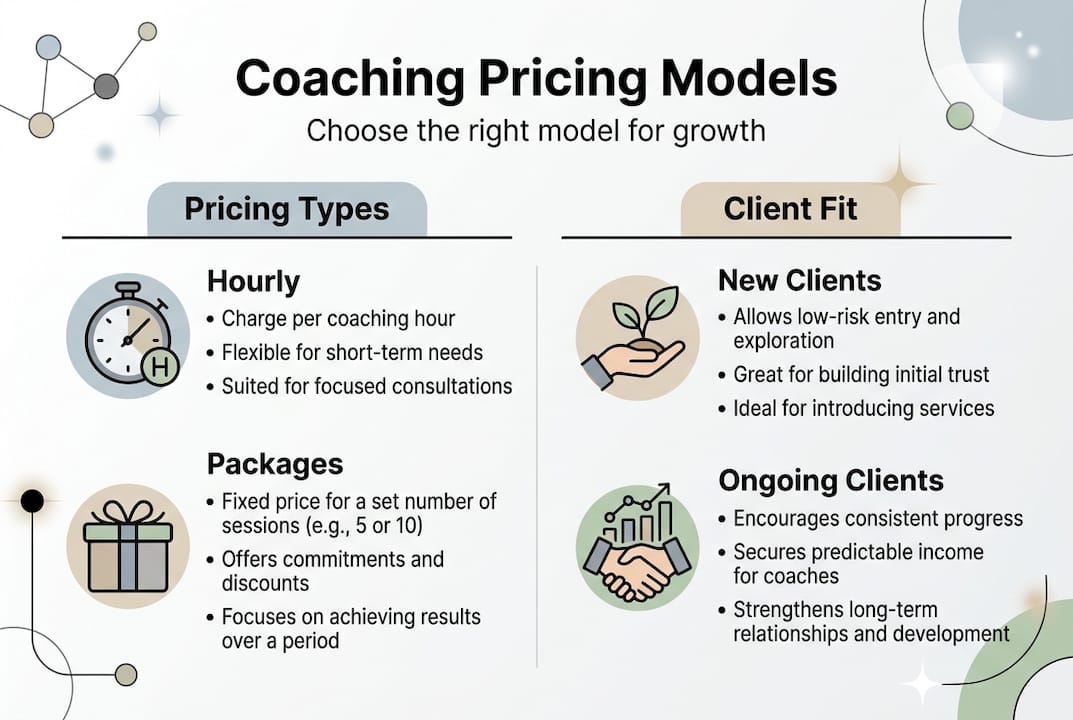
Three main pricing models dominate the coaching industry, each with distinct advantages depending on your business stage and client needs. Hourly pricing charges clients for time spent, making it straightforward but limiting income potential since you trade hours for dollars. Package pricing bundles sessions or outcomes into fixed offerings, creating predictable revenue and clearer client commitments. Value-based pricing ties fees to the transformation or results clients achieve, often commanding premium rates for experienced coaches.
Different pricing models like hourly, package, or value-based fees suit different coaching business stages and client types. Early in your practice, hourly or package pricing provides simplicity while you refine your methodology. As you build case studies and deepen expertise, value-based pricing becomes viable because you can confidently predict and deliver specific outcomes.
| Pricing model | Best for | Income potential | Workload impact |
|---|---|---|---|
| Hourly | New coaches testing services | Limited by available hours | High time commitment per dollar |
| Package | Established coaches with proven process | Moderate to high with volume | Balanced workload and revenue |
| Value-based | Expert coaches with measurable outcomes | Highest potential | Lowest time per revenue dollar |
Choosing your model requires honest assessment of where you are now and where you want to go. Ask yourself: Do I have enough client results to confidently promise specific outcomes? Can I clearly articulate the transformation clients experience? Do I want to scale income without proportionally increasing hours worked?
Pro Tip: Blend pricing strategies for different client segments. Offer hourly consultations for quick wins, package programs for committed clients, and premium value-based engagements for transformation seekers. This creates pricing for profit strategies that stabilize income across market fluctuations.
The decision criteria boil down to three factors: your current expertise level and track record, your capacity for client work without burnout, and the expectations of your target market. Corporate clients often expect package or retainer arrangements, while individual clients may start with hourly sessions before committing to longer engagements. Match your model to both your business goals and client buying behavior.
Your pricing strategy should evolve as you do. What works when you’re building a client base differs from what sustains a mature practice. The key is choosing intentionally based on where you are now while planning for where you’re headed, not copying what other coaches do without understanding the reasoning behind their approach.
Structuring your coaching packages and fees for sustainable wealth
Package design transforms one-off transactions into predictable revenue streams while delivering better client outcomes. Start by identifying the core transformation clients seek, then reverse engineer the support needed to achieve it. This approach shifts focus from selling hours to selling results, which clients value far more than your time.
Follow these steps to create tiered packages that serve different client needs and budgets:
- Define your signature transformation and the timeline required to deliver it.
- Map the essential components like sessions, resources, and support needed for success.
- Create three tiers: a foundational package with core elements, a premium package with enhanced support, and a VIP option with maximum access and personalization.
- Price each tier based on the value delivered, not just the hours included.
- Test packages with a small group before full launch to refine based on real feedback.
Package structuring improves client satisfaction while smoothing revenue streams and workload. When clients commit to a package, they’re more likely to complete the work and see results, which builds your reputation and referral pipeline. You also avoid the constant sales cycle of booking individual sessions, freeing mental energy for delivery and growth.

| Package tier | Sessions included | Support level | Investment range |
|---|---|---|---|
| Foundation | 4-6 sessions | Email support | $1,200-$2,000 |
| Premium | 8-12 sessions | Email + messaging | $3,000-$5,000 |
| VIP | 12+ sessions | Unlimited access | $6,000-$10,000+ |
Add-ons and bonus services increase perceived value without significantly increasing your workload. Consider offering resources like workbooks, recorded trainings, or group coaching calls as package enhancements. These elements differentiate your offerings and justify premium pricing while providing clients with multiple learning modalities.
Pro Tip: Clearly communicate package benefits in terms of outcomes, not features. Instead of listing session counts, describe the transformation clients will experience and the specific problems they’ll solve. This communication shift reduces price objections because clients focus on value received rather than cost paid.
The structure you choose should reflect your capacity and lifestyle goals. If you want flexibility, keep packages shorter with renewal options. If you prefer predictable income, design longer engagements with payment plans. The sustainable approach aligns package length and pricing with both client success timelines and your business needs, creating win-win arrangements that prevent resentment and burnout.
Adjusting and raising your rates confidently without losing clients
Your rates should evolve as your expertise deepens and demand increases. Waiting too long to raise prices leaves money on the table and creates resentment toward existing clients paying outdated fees. Regular pricing reviews keep your business financially healthy and your energy aligned with the value you deliver.
Several signs indicate it’s time to raise rates:
- Your calendar fills quickly with a waiting list forming.
- You’ve gained certifications, credentials, or specialized expertise.
- Client results have dramatically improved with measurable outcomes.
- Your current rates no longer support your financial goals or lifestyle needs.
- Market research shows comparable coaches charging significantly more.
Communicating rate changes requires transparency and professionalism. Give existing clients advance notice, typically 60 to 90 days, explaining the reasons for the increase. Frame it around the enhanced value you now deliver, not just inflation or business costs. Offer a grandfather period where current clients maintain existing rates for a set time, creating goodwill while transitioning to new pricing.
Regular price review and transparent communication are key to raising rates while retaining clients. Most clients understand that businesses grow and prices adjust. The ones who leave over reasonable increases likely weren’t your ideal clients anyway. Focus on the clients who value your work enough to invest at the new level.
Handling objections starts before they arise. When you consistently deliver exceptional results and maintain strong relationships, clients rarely balk at fair increases. If concerns do surface, listen without defensiveness and remind them of the transformation they’ve experienced. Offer payment plan options if the increase creates temporary hardship for valued clients.
Your pricing strategy should be a living document that evolves with your business. Review rates annually at minimum, adjusting based on demand, expertise growth, and market conditions. This proactive approach prevents the sticker shock of dramatic increases and keeps your business financially sustainable. Remember that confident pricing reflects confident expertise, and clients respond to that certainty by investing in themselves through your guidance.
Explore coaching business growth tools at FreedomSun
Pricing your coaching services is just one piece of building sustainable wealth without burnout. FreedomSun provides comprehensive resources designed specifically for women coaching entrepreneurs ready to stop undercharging and start building real wealth. Our platform bridges the gap between knowing what you should charge and actually implementing pricing strategies that work.
Explore tools covering pricing strategy, client communication, and sustainable business growth at FreedomSun. The Women’s Wealth Collective academy offers frameworks for setting competitive fees, structuring packages, and communicating value confidently. You’ll find practical guidance that addresses both the numbers and the nervous system challenges that keep talented coaches stuck in underpricing patterns.
FAQ
How do I know if my coaching prices are too low?
Indicators include consistently feeling overworked, difficulty reaching financial goals, and clients undervaluing your service. If you’re booked solid but still struggling financially, or if clients frequently ask for discounts, your rates likely don’t reflect your true value. Regularly compare your fees with market averages for coaches at your experience level and adjust accordingly.
What pricing model works best for new coaches?
Starting with hourly or package pricing often provides simplicity and flexibility for new coaches. Hourly rates let you test different client types and refine your approach without long commitments. As you build case studies and confidence in delivering specific outcomes, transition to package or value-based pricing that reflects the transformation you create rather than just time spent.
How often should I review and raise my coaching rates?
Review rates yearly or after major milestones like certifications, specialization development, or significant increases in demand. Annual reviews keep pricing aligned with expertise growth and market conditions. Communicate changes to existing clients with 60 to 90 days notice, offering grandfather periods to preserve relationships while transitioning to rates that support sustainable business growth.
Can I offer different prices to different clients?
Offering different package tiers at various price points serves clients with different needs and budgets. However, charging different rates for the same service to different people creates ethical issues and damages trust. Instead, create legitimate tiers with distinct value levels, allowing clients to self-select based on their investment capacity and desired level of support.
What if clients say my prices are too high?
Price objections often reflect misalignment rather than actual affordability issues. When someone says you’re too expensive, they’re really saying they don’t see enough value to justify the investment. Refine how you communicate transformation and outcomes rather than immediately lowering prices. The right clients will invest when they understand the value, while bargain hunters will always seek cheaper options regardless of your rates.