How to Build Scalable Systems for Lasting Business Growth

Facing the constant pressure of scaling a startup, founders often discover that internal bottlenecks threaten both financial clarity and operational stability. As your organization grows, even small process gaps can turn into major obstacles, slowing down progress and increasing stress. This guide shows you how to build systems for sustained momentum and wellbeing, emphasizing systematic bottleneck identification and scalable architecture for lasting growth without burnout.
Table of Contents
- Step 1: Assess Current Operations And Identify Bottlenecks
- Step 2: Design System Architecture Aligned With Growth Goals
- Step 3: Implement Automated Processes And Infrastructure
- Step 4: Establish Metrics To Monitor Performance
- Step 5: Optimize Systems For Sustainability And Wellbeing
Quick Summary
| Key Point | Explanation |
|---|---|
| 1. Identify Operational Bottlenecks | Map out your business workflow to spot areas causing delays, enabling streamlined processes and efficient growth. |
| 2. Design Modular System Architecture | Create a flexible system that easily scales with business demands by using modular components for smooth updates and adaptations. |
| 3. Automate Repetitive Tasks First | Start automation with high-impact tasks to yield immediate benefits and gain support for wider implementation across the organization. |
| 4. Implement Strategic Performance Metrics | Develop KPIs aligned with business goals to track progress, ensuring metrics provide actionable insights for continuous improvement. |
| 5. Focus on Sustainability and Wellbeing | Design systems that emphasize long-term success through environmental responsibility and employee wellness, contributing to a resilient business model. |
Step 1: Assess Current Operations and Identify Bottlenecks
Building scalable systems starts with understanding your current operational landscape. Your goal is to pinpoint specific constraints that prevent smooth business growth and efficiency.
To conduct a comprehensive bottleneck analysis, map out your entire business process workflow, tracking each step from initial input to final output. Systematic bottleneck identification requires examining time consumption, resource allocation, and potential productivity limitations. Look for specific areas where work slows down or gets stuck such as approval processes, communication handoffs, or technical infrastructure gaps.
Start by gathering data from multiple sources: employee feedback, performance metrics, time tracking logs, and system reports. Analyze each operational segment critically, noting where delays occur most frequently. Holistic business process mapping helps uncover hidden inefficiencies that might not be immediately apparent during day-to-day operations.
Pro tip: Create a visual workflow diagram that color codes potential bottleneck areas to make constraints more immediately recognizable across your team.
Step 2: Design System Architecture Aligned with Growth Goals
Building a scalable system requires strategic architectural design that anticipates and supports your business growth trajectory. This step focuses on creating a flexible infrastructure that can expand seamlessly as your organization evolves.
Scalable system architecture demands a modular approach that allows individual components to be upgraded or replaced without disrupting entire operations. Focus on developing loosely coupled systems where each functional element can operate independently while connecting smoothly with other parts of your business infrastructure. This means designing workflows that can handle increasing complexity without requiring complete system redesigns.
Implement cloud-native solutions and distributed computing models that provide enterprise architecture elasticity. Prioritize technologies that offer automatic scaling, load balancing, and resource optimization. Consider platforms that enable horizontal scaling, allowing you to add computational resources horizontally rather than vertically. This approach ensures your system can absorb growth without performance bottlenecks or significant redesign investments.
Pro tip: Design your system with 30% additional capacity beyond current requirements to create natural buffer zones for unexpected growth and minimize future restructuring efforts.
Here’s a comparison of traditional vs. modular system architecture approaches for business growth:
| Aspect | Traditional Architecture | Modular Architecture |
|---|---|---|
| Scalability | Difficult and slow to scale | Easily adapts to changes |
| Maintenance | High risk of downtime | Lower risk, parts updated independently |
| Flexibility | Rigid, harder to modify | Responsive to new requirements |
| Investment | Expensive over time | Cost-effective long term |
Step 3: Implement Automated Processes and Infrastructure
Transforming your business infrastructure requires strategic automation that reduces manual work and creates consistent, scalable operational workflows. Your goal is to design systems that run smoothly with minimal human intervention, freeing up your team to focus on high-value strategic initiatives.
Process automation principles involve systematically breaking down your existing workflows and identifying opportunities for technological integration. Implement a comprehensive approach that uses the ADOPT framework—Abstraction, Discovery, Orchestration, Platform, and Tasks. This means carefully mapping out each business process, identifying repetitive tasks, and selecting appropriate automation tools that can integrate seamlessly with your existing technology stack.
Focus on building scalable infrastructure with modular components that enable flexible growth. Prioritize microservices architecture and cloud computing platforms that allow you to add or modify services without disrupting entire systems. Select automation tools that provide robust reporting, enable easy reconfiguration, and support your specific business requirements. Pay special attention to integrating these automated processes across different departments to create a unified, efficient operational ecosystem.
Pro tip: Start by automating your most time consuming and repetitive processes first, creating quick wins that demonstrate immediate value and build organizational momentum for broader automation efforts.
Step 4: Establish Metrics to Monitor Performance
Tracking business performance requires a strategic approach to measuring progress and identifying areas for improvement. Your objective is to develop a comprehensive measurement system that provides actionable insights and drives continuous organizational growth.
Performance metric development demands a systematic approach using frameworks like the MPRA method. Start by clearly defining your business objectives and selecting key performance indicators that directly align with your strategic goals. Focus on creating metrics that are specific, measurable, achievable, relevant, and time-bound. This means moving beyond surface-level measurements to identify indicators that truly reflect your business’s operational health and growth potential.
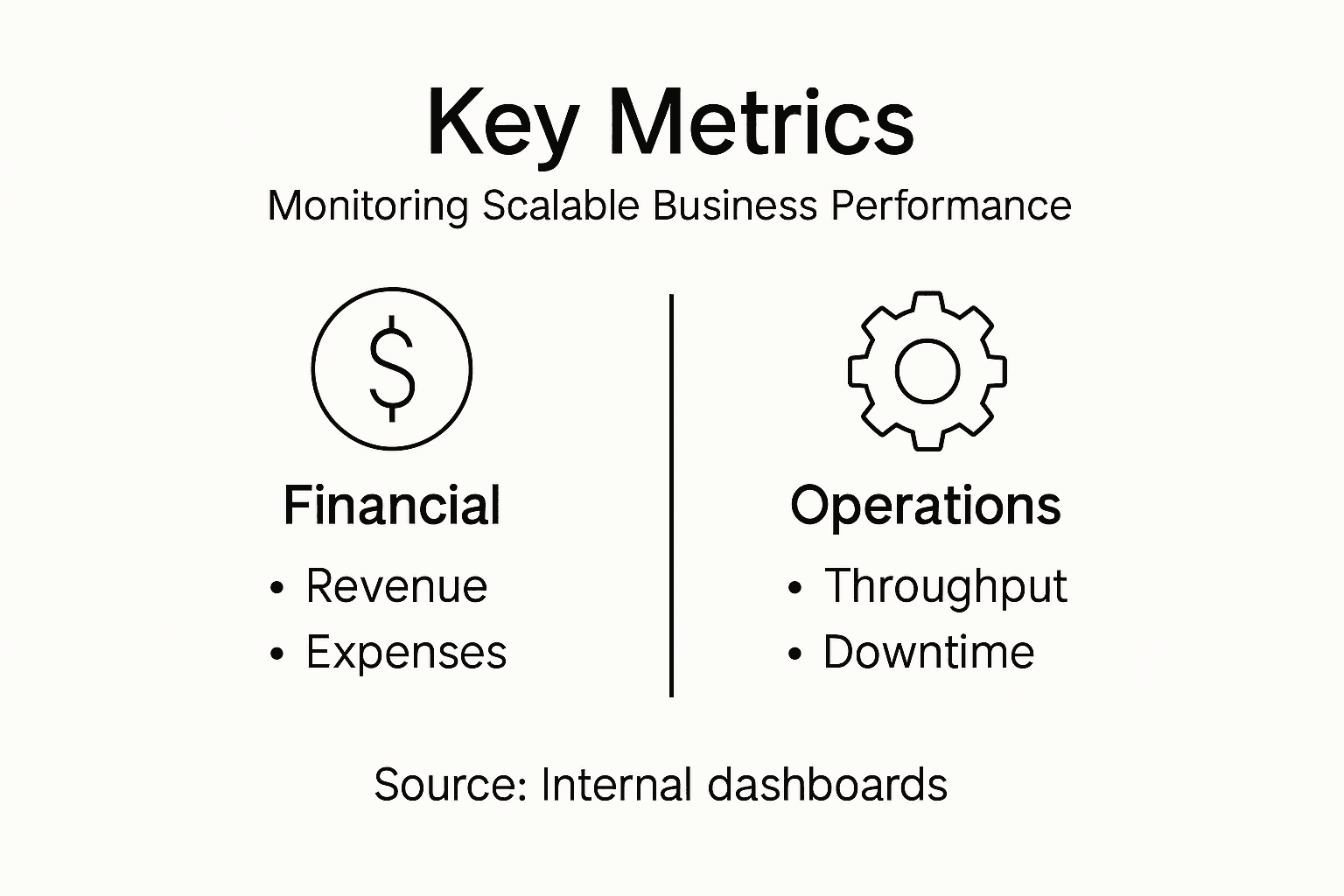
Data visualization and KPI integration are crucial for making metrics meaningful. Implement real-time dashboards that provide immediate visibility into critical performance areas. Choose tools that allow for easy tracking, comparison, and trend analysis. Ensure your metrics cover multiple dimensions of business performance including financial results, operational efficiency, customer satisfaction, and team productivity. Create a culture of accountability by sharing these metrics transparently across your organization and using them as a basis for strategic decision making.
Pro tip: Conduct quarterly metric reviews to reassess the relevance of your key performance indicators and adjust them as your business evolves and market conditions change.
This summary highlights key metrics to monitor across business areas:
| Metric Area | Example KPI | Business Insight |
|---|---|---|
| Financial Performance | Net profit margin | Monitors cost vs. revenue |
| Operational Efficiency | Process cycle time | Reveals process bottlenecks |
| Customer Satisfaction | Net Promoter Score | Measures client loyalty |
| Team Productivity | Tasks completed per week | Tracks workforce output |
Step 5: Optimize Systems for Sustainability and Wellbeing
Creating a sustainable business model requires more than financial performance. Your goal is to design systems that support long-term success by integrating environmental responsibility, employee wellbeing, and strategic growth.

Scalable business models must be built with holistic thinking that considers stakeholder impact and resource efficiency. This means developing processes that minimize waste, promote ethical practices, and create value beyond immediate financial returns. Look for opportunities to streamline operations while maintaining a commitment to social and environmental sustainability.
Sustainable human resource practices are critical for maintaining organizational resilience. Implement wellbeing initiatives that support employee mental health, encourage work life balance, and create a supportive workplace culture. This approach not only enhances productivity but also builds a more engaged and adaptable workforce capable of driving long term business success. Design systems that provide flexibility, continuous learning opportunities, and meaningful work experiences that align with your broader organizational mission.
Pro tip: Conduct an annual sustainability audit that measures both financial performance and qualitative impact metrics to ensure your systems remain aligned with your growth and wellbeing objectives.
Build Scalable Systems That Deliver Lasting Growth and Peace of Mind
The challenge of scaling your business while avoiding bottlenecks and burnout is real. This article highlights key pain points such as identifying operational constraints, designing flexible system architecture, and automating processes for sustainable growth. If you are striving to move beyond traditional rigid methods and want to implement a modular, automated infrastructure that supports your evolving needs, you need more than quick fixes—you need a strategic framework that balances financial clarity, system health, and leadership resilience.
At Freedom Sun, we specialize in empowering high-growth entrepreneurs and executives to create scalable, sustainable businesses without sacrificing personal well-being. Our unique Operating System framework focuses on MATH (financial clarity), MECHANICS (systems infrastructure), and MIND (leadership and mental resilience) to help you build robust internal operations aligned with your growth goals. Whether it is automating your most time-consuming processes or establishing performance metrics that drive continuous improvement, our platform provides interactive training, diagnostic assessments, and a supportive community to guide your journey.
Are you ready to transform your business systems and elevate your leadership to new levels of strategic success? Discover how to build resilient, scalable frameworks tailored for lasting wealth and peace by exploring Freedom Sun’s Operating System. Take the next step now and begin shaping your future with confidence.
Frequently Asked Questions
How can I identify bottlenecks in my current operations?
To identify bottlenecks in your operations, map out your entire business process workflow. Gather data from employee feedback and performance metrics to pinpoint areas where work slows down.
What steps can I take to design a scalable system architecture?
To design a scalable system architecture, focus on creating a modular infrastructure that supports growth. Ensure that each component can operate independently while connecting smoothly with the overall system, allowing for future upgrades without major disruptions.
What automation strategies should I consider for creating scalable processes?
Consider implementing the ADOPT framework to systematically break down workflows and identify repetitive tasks. Start by automating the most time-consuming processes first for quick wins, which can demonstrate immediate value to your team.
How should I establish metrics to monitor my business performance effectively?
To establish effective performance metrics, define clear business objectives and select key performance indicators that align with those goals. Create a real-time dashboard for immediate visibility into these metrics, enabling better decision-making and accountability.
What are some practices to optimize systems for sustainability and employee wellbeing?
To optimize for sustainability and employee wellbeing, integrate initiatives that promote ethical practices and minimize waste. Conduct an annual sustainability audit that assesses both financial performance and the qualitative impacts on employees and the environment.