Sustainable Business Scaling Guide for Lasting Success

Most American founders admit financial clarity is one of the hardest challenges when scaling their tech ventures. Growing a business from pure hustle to lasting success means building systems that turn chaos into insight. When you understand what metrics matter and create automated processes, you unlock a path to sustainability few achieve. This guide reveals tested steps for establishing benchmarks, smart automation, and resilient teams so your operations fuel sustainable growth and peace of mind.
Table of Contents
- Step 1: Establish Financial Clarity And Scalable Benchmarks
- Step 2: Build Automated Systems For Seamless Operations
- Step 3: Develop Resilient Leadership And Team Alignment
- Step 4: Verify System Health And Sustainable Growth Metrics
- Step 5: Optimize For Continuous Improvement And Peace
Quick Summary
| Key Point | Explanation |
|---|---|
| 1. Establish Financial Clarity | Develop scalable business metrics to illuminate performance and guide decisions. |
| 2. Build Automated Systems | Transform manual processes into automated systems to enhance productivity and reduce errors. |
| 3. Cultivate Resilient Leadership | Foster an adaptive leadership culture to align team strengths with organizational goals. |
| 4. Verify Sustainable Growth Metrics | Implement a systematic verification process to measure performance across various domains. |
| 5. Optimize for Continuous Improvement | Embrace incremental changes and create feedback mechanisms to support organizational growth. |
Step 1: Establish financial clarity and scalable benchmarks
Building a sustainable business requires transforming financial complexity into strategic clarity. Successful entrepreneurs understand that scalable growth depends on creating robust financial systems that illuminate performance and guide decision making.
The foundation of financial clarity starts with developing scalable business metrics. This means identifying key performance indicators that go beyond traditional accounting measures and capture the true health of your business ecosystem. Research reveals that sustainable startups must align their financial tracking with their broader vision, creating measurement frameworks that reflect both economic performance and impact potential.
To achieve this, start by mapping out your financial benchmarks across three critical dimensions: revenue generation, operational efficiency, and strategic investment. Break down each dimension into specific measurable indicators that provide granular insights into your business trajectory. These might include metrics like customer acquisition cost, lifetime value, profit margins, and reinvestment rates. The goal is not just tracking numbers but creating a dynamic financial intelligence system that adapts and evolves with your business.
Pro tip: Implement quarterly financial review sessions where you critically examine your benchmarks and recalibrate your metrics to ensure continued relevance and accuracy.
Here’s a summary of key business metrics and their strategic impact:
| Metric | Description | Strategic Impact |
|---|---|---|
| Customer Acquisition Cost | Total cost to acquire a new customer | Guides marketing and sales spend |
| Lifetime Value | Predicted revenue from a single customer | Shapes retention strategies |
| Profit Margin | Net income divided by total revenue | Indicates operational efficiency |
| Reinvestment Rate | Portion of profits reinvested into the business | Fuels long-term growth |
Step 2: Build automated systems for seamless operations
Scaling your business requires transforming manual processes into intelligent automated systems that work continuously and efficiently. The key is creating operational infrastructure that reduces human error and maximizes productivity across your entire organization.
Modern businesses can leverage intelligent automation technologies to streamline complex workflows and create sustainable operational models. This means integrating enterprise resource planning (ERP) systems, workflow management tools, and artificial intelligence to build interconnected platforms that adapt and respond dynamically to business needs. Start by mapping out your current operational processes and identifying repetitive tasks that consume significant time and resources.
Focus on developing integrated systems that communicate seamlessly across different departments. This might include automating financial reporting, customer relationship management, inventory tracking, and communication workflows. The goal is not just replacing manual work but creating an intelligent ecosystem where information flows smoothly and decisions can be made quickly based on real-time data. Your automated systems should reduce operational friction while providing granular insights into your business performance.

Pro tip: Implement a phased automation approach where you gradually introduce automated solutions and continuously monitor their effectiveness to minimize disruption and maximize system integration.
This table highlights how automation transforms key operational areas:
| Process Area | Manual Approach | Automated Approach | Business Benefit |
|---|---|---|---|
| Financial Reporting | Spreadsheet-based, time intensive | Real-time dashboards via ERP | Faster, error-free decisions |
| Inventory Tracking | Manual counts and records | Barcode scanning, automated updates | Reduces stock-outs and overstock |
| CRM | Individual email tracking | Centralized, AI-driven interactions | Improves customer relationships |
| Communication | Ad hoc emails, missed messages | Integrated workflow tools | Boosts collaboration and transparency |
Step 3: Develop resilient leadership and team alignment
Building a sustainable business requires more than technical skills it demands creating a resilient leadership framework that can navigate complexity and inspire collective performance. Your primary goal is transforming individual talents into a unified strategic force that adapts and thrives under changing conditions.
Successful entrepreneurs understand the importance of sustainable leadership strategies that foster team cohesion and organizational resilience. This means cultivating a culture where communication is transparent, individual strengths are recognized, and collective goals supersede personal agendas. Focus on developing three core leadership competencies: emotional intelligence, adaptive problem solving, and inclusive communication. These skills enable you to create an environment where team members feel valued, understood, and motivated to contribute their best work.
To achieve meaningful team alignment, implement structured yet flexible frameworks that encourage open dialogue and collaborative decision making. This involves creating regular communication channels like weekly strategy sessions, anonymous feedback mechanisms, and cross functional team projects. Develop clear performance metrics that balance individual achievements with team outcomes, ensuring that your organizational structure rewards collaboration and shared success. Remember that resilient leadership is not about controlling every aspect of your business but about creating an adaptive ecosystem where your team can innovate and respond effectively to emerging challenges.
Pro tip: Conduct quarterly team alignment workshops that blend professional development with strategic planning to maintain organizational agility and collective commitment.
Step 4: Verify system health and sustainable growth metrics
Sustainable business growth requires more than intuition it demands rigorous measurement and continuous verification of your organizational systems performance. Your objective is to transform abstract metrics into actionable insights that drive strategic decision making and long-term resilience.
Entrepreneurs can leverage comprehensive sustainability performance metrics to evaluate their business ecosystem holistically. This involves developing a multidimensional assessment framework that goes beyond traditional financial indicators to include environmental, social, and governance factors. Create a dashboard that tracks key performance indicators across three primary domains: financial sustainability, operational efficiency, and strategic impact. These metrics should provide a clear snapshot of your business health while highlighting potential areas for improvement and strategic optimization.
Implement a systematic verification process that includes quarterly comprehensive reviews, real-time monitoring tools, and external benchmarking against industry standards. Focus on developing adaptive metrics that can evolve with your business model and market conditions. This means creating flexible assessment frameworks that capture both quantitative performance data and qualitative insights from team members and stakeholders. Your verification approach should balance numerical precision with contextual understanding allowing you to make informed decisions that support sustainable growth and organizational resilience.
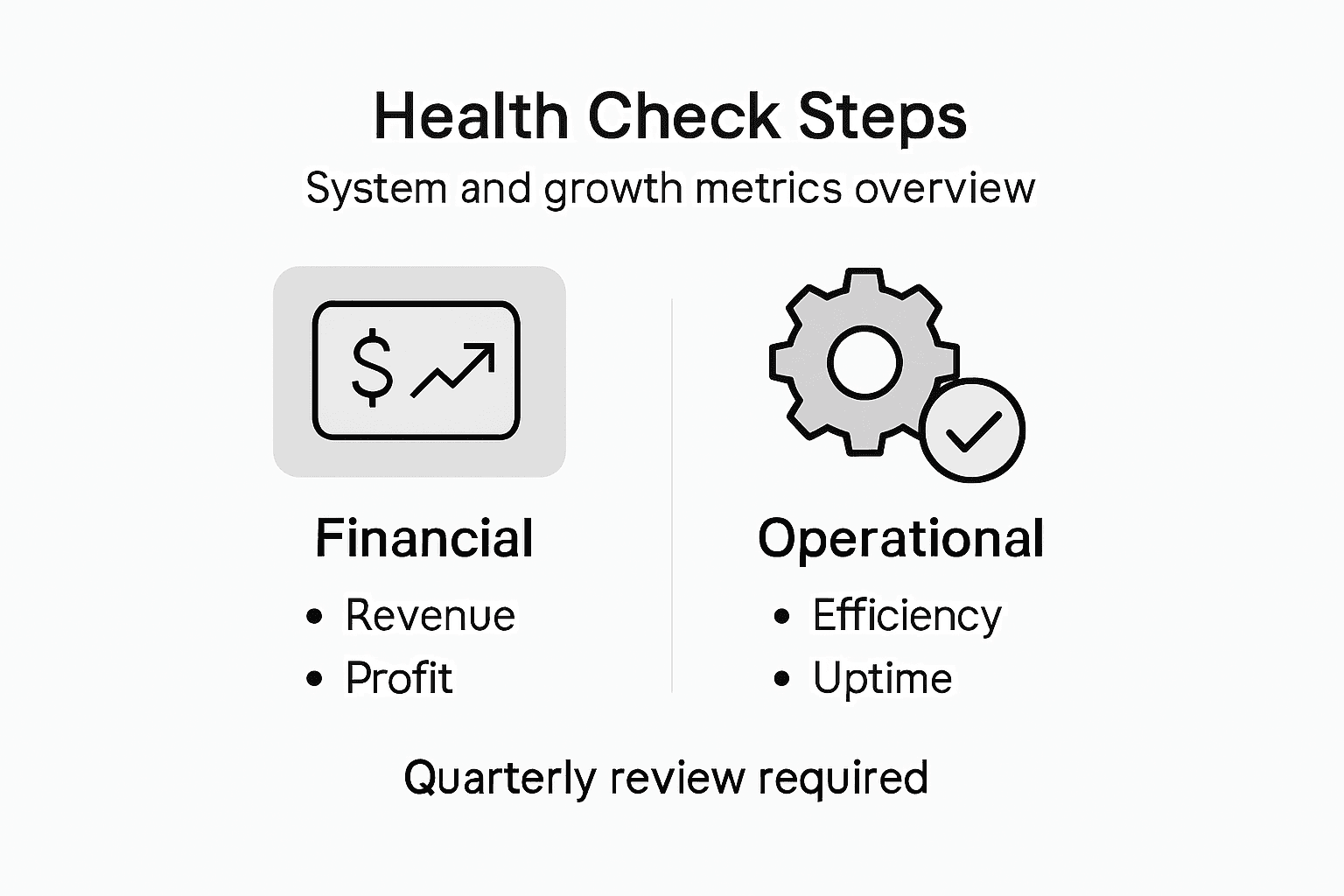
Pro tip: Develop a quarterly scorecard that weights different performance metrics dynamically to maintain a comprehensive and nuanced view of your business ecosystem.
Step 5: Optimize for continuous improvement and peace
Creating sustainable success requires more than static strategies it demands building an adaptive organizational culture that embraces incremental growth and systematic refinement. Your ultimate goal is establishing a framework where improvement becomes a natural rhythm of your business operations.
Entrepreneurs can implement continuous improvement methodologies that transform organizational performance through strategic incremental changes. This involves developing a systematic approach that encourages team members to identify inefficiencies, propose solutions, and actively participate in organizational evolution. Create feedback mechanisms that capture insights from every level of your organization fostering a culture where continuous learning and adaptation are celebrated as core business principles.
Design an improvement infrastructure that balances structured methodology with creative flexibility. This means establishing regular review cycles complemented by open communication channels that allow spontaneous innovation. Implement tools like weekly reflection sessions, anonymous suggestion platforms, and cross functional improvement teams. Your optimization strategy should focus on small sustainable changes that compound over time creating a resilient business ecosystem capable of adapting to market shifts while maintaining operational stability and team morale.
Pro tip: Develop a monthly innovation budget that rewards team members who successfully implement efficiency improvements and contribute to organizational learning.
Unlock Sustainable Business Growth with Proven Systems
Scaling a business sustainably requires more than tracking numbers or automating tasks. It demands strategic financial clarity, intelligent operational systems, and resilient leadership that evolves with your organization. This guide reveals how transformative benchmarks, automated workflows, and adaptive team alignment work hand in hand to build lasting success without burnout or guesswork.
If you are a high-growth entrepreneur or executive ready to move beyond hustle culture and create scalable wealth with peace of mind, discover how Freedom Sun’s unique Operating System framework bridges these exact challenges. Our three pillars—MATH for financial mastery, MECHANICS for seamless systems infrastructure, and MIND for leadership resilience—empower you to own your growth journey with confidence. Start embedding robust financial systems, automated operations, and mental resilience modeled after Fortune 500 CFOs.
Explore how to elevate your business by accessing interactive training, diagnostic tools, and a supportive community focused on sustainable leadership. Visit Freedom Sun now and take the next step to build your business with profitable peace. Learn more about our Operating System framework and start transforming your business foundation today.
Frequently Asked Questions
How can I establish financial clarity in my business?
To establish financial clarity, identify key performance indicators (KPIs) that reflect your business’s overall health. Create a framework to measure areas such as revenue generation, operational efficiency, and strategic investment. Start by mapping these metrics and conducting quarterly reviews to keep your benchmarks relevant.
What are some effective automated systems for improving operational efficiency?
Implement automated systems for tasks like financial reporting, inventory management, and customer relationship management to minimize manual errors and increase productivity. Identify repetitive processes in your workflow and gradually introduce automation solutions within 30-60 days for a smoother transition.
What leadership qualities should I develop for sustainable team alignment?
Focus on developing emotional intelligence, adaptive problem-solving, and inclusive communication within your leadership style. By cultivating these qualities, you can foster a cohesive work environment where team members feel motivated and valued, ultimately enhancing collective performance.
How can I verify the health of my business systems effectively?
To verify the health of your business systems, create a dashboard that tracks key performance indicators across financial, operational, and strategic domains. Conduct quarterly comprehensive reviews to assess these metrics and make necessary adjustments based on real-time data for continuous improvement.
What steps should I take to create a culture of continuous improvement?
Establish a feedback mechanism that encourages team members to suggest process improvements actively. Schedule regular review sessions and allocate time for innovation discussions, allowing your team to implement small enhancements that can cumulatively elevate your business’s performance over time.
How do I choose the right scalable business metrics?
Selecting scalable business metrics involves aligning your KPIs with your broader business vision while ensuring they’re measurable and specific. Focus on indicators like customer acquisition cost and profit margins, and recalibrate these metrics during quarterly reviews to adapt to shifting goals.