Why Build Robust Systems for Entrepreneur Success

Most American tech founders discover the hard way that fragile business systems can drain energy and threaten long-term success. In a world where even a one-hour outage can cost thousands, building robust operational foundations is no longer optional. Entrepreneurs who prioritize resilient systems see fewer setbacks, less burnout, and more predictable growth. This guide reveals how adopting a strong financial framework creates stability so you can confidently scale without sacrificing your health or vision.
Table of Contents
- Defining Robust Systems In Business
- Core Components Of Robust System Design
- Benefits For Tech Entrepreneurs And Founders
- Common Pitfalls Of Fragile Systems
- Steps To Implement Scalable Solutions
Key Takeaways
| Point | Details |
|---|---|
| Robust Systems Foster Resilience | Implementing robust systems helps businesses withstand disruptions and maintain performance, enabling growth in complex environments. |
| Scalability is Essential | Creating modular and scalable solutions allows businesses to expand without compromising on performance or reliability. |
| Regular Audits are Crucial | Conducting systematic reviews of technology infrastructure helps identify vulnerabilities and optimize system design for sustainable growth. |
| Fragile Systems Pose Risks | Weak, monolithic systems can lead to catastrophic failures; investing in robust architecture is critical for business continuity. |
Defining Robust Systems in Business
Robust business systems represent strategic architectural frameworks designed to maintain stability, performance, and adaptability under diverse operational conditions. Unlike fragile infrastructures that collapse under pressure, robust systems create predictable environments where entrepreneurs can confidently scale and manage complex business challenges.
The core principle of robust systems centers on creating resilient structures that can withstand changes without compromising core functionality. This means developing organizational mechanisms that absorb disruptions, maintain consistent performance, and rapidly recalibrate when external pressures emerge. Entrepreneurs who prioritize system robustness can effectively mitigate risks, reduce operational vulnerabilities, and create sustainable growth pathways.
Key characteristics of robust business systems include:
- Adaptive flexibility
- Redundant critical processes
- Clear performance metrics
- Systematic error detection mechanisms
- Scalable infrastructure design
Pro Tip: System Resilience Assessment: Conduct a quarterly diagnostic review of your business infrastructure, identifying potential weak points and developing contingency strategies before they become critical failure points.
By understanding and implementing robust system architectures, entrepreneurs transform unpredictable business landscapes into navigable, strategic environments where controlled growth becomes the standard operating mode.
Core Components of Robust System Design
Robust system design demands a strategic approach that transcends traditional infrastructure development. At its core, the framework requires entrepreneurs to build intricate yet flexible architectural models that can adapt to changing business environments while maintaining optimal performance and security.
The fundamental pillars of robust system design include modularity, which enables independent system changes with minimal disruption. This approach allows businesses to update specific components without compromising the entire operational ecosystem. Modularity represents a critical strategy for entrepreneurs seeking agile and responsive technological infrastructures that can evolve rapidly with market demands.
Key components of robust system architecture encompass several strategic elements:
- Scalability: Capacity to handle increasing workloads without performance degradation
- Security-by-Design: Integrated protective mechanisms from initial development stages
- Fault Tolerance: Systems that can continue functioning during partial component failures
- Performance Optimization: Mechanisms for continuous monitoring and improvement
- Interoperability: Seamless communication between different system components
Advanced robust systems also incorporate sophisticated technical strategies such as load balancers and API gateways to distribute network traffic and manage request routing. These technologies ensure high availability, minimize potential bottlenecks, and create resilient operational environments that can withstand significant operational pressures.
Pro Tip: Architectural Audit: Schedule biannual comprehensive reviews of your system architecture, identifying potential integration challenges and proactively designing scalable solutions before they become critical constraints.
Ultimately, robust system design is not just about technology - it’s about creating an adaptive, intelligent infrastructure that supports sustainable business growth and innovation.
Benefits for Tech Entrepreneurs and Founders
Tech entrepreneurs operate in an increasingly complex digital landscape where system reliability can make or break business success. Robust systems offer a strategic advantage that transforms potential operational vulnerabilities into opportunities for sustainable growth and innovation.
Implementing robust systems provides tech founders with enhanced scalability and reliability, enabling businesses to expand without compromising performance quality. These architectural frameworks create resilient environments where technological infrastructure adapts seamlessly to evolving market demands, providing entrepreneurs with a competitive edge in fast-moving technological ecosystems.
Key benefits of robust systems for tech entrepreneurs include:
- Continuous Operational Stability: Minimizing unexpected downtime
- Adaptive Technological Infrastructure: Flexible frameworks that scale with business growth
- Enhanced Security Protocols: Proactive protection against potential technological vulnerabilities
- Performance Optimization: Consistent high-quality service delivery
- Risk Mitigation: Reduced potential for systemic failures
Moreover, robust systems enable founders to maintain functionality despite fluctuating operational conditions, dramatically reducing potential revenue losses and protecting the company’s reputation for reliability. By investing in comprehensive system design, entrepreneurs create technological ecosystems that are not just reactive, but strategically predictive.

Pro Tip: Strategic System Audit: Conduct quarterly comprehensive reviews of your technological infrastructure, identifying potential weak points and developing proactive enhancement strategies before they become critical limitations.
Ultimately, robust systems represent more than technological architecture - they are strategic investments in sustainable business resilience and long-term entrepreneurial success.
Common Pitfalls of Fragile Systems
Fragile systems represent a critical vulnerability for entrepreneurs, creating invisible landmines that can potentially destroy years of hard work and strategic development. These technological infrastructures appear functional on the surface but collapse under minimal stress, exposing businesses to significant operational and financial risks.
Fragile systems fundamentally suffer from a lack of modularity, which leads to catastrophic widespread failures when a single component malfunctions. This structural weakness means that a minor technical issue can trigger a domino effect, causing complete system shutdown and potentially irreparable damage to business continuity and customer trust.
Common characteristics of fragile systems include:
- Monolithic Architecture: Tightly coupled components with no independent functionality
- Limited Scalability: Performance degrades rapidly under increased workload
- Inadequate Error Handling: No mechanisms to manage unexpected operational scenarios
- Weak Security Protocols: Vulnerable entry points for potential breaches
- Manual Intervention Dependency: Requires constant human monitoring and correction
Systems that are not robustly designed tend to fail dramatically under unexpected conditions, creating significant operational disruptions. These technological infrastructures lack the adaptive capacity to manage unforeseen challenges, transforming minor technical complications into potentially catastrophic business interruptions.
Pro Tip: System Vulnerability Scan: Perform a comprehensive quarterly diagnostic assessment of your technological infrastructure, identifying potential weak points and developing preemptive mitigation strategies before they become critical failure points.
Recognizing and addressing these fragile system characteristics is not just a technical exercise - it’s a fundamental strategic imperative for sustainable business success.
Here is a comparison of robust and fragile business systems to highlight their different impacts on operational performance:
| Aspect | Robust Systems | Fragile Systems |
|---|---|---|
| Response to Disruption | Remain operational under stress | Likely to fail with minor issues |
| Ability to Scale | Seamlessly handle business growth | Struggle or degrade with expansion |
| Risk Exposure | Minimized through redundancy | Elevated due to single points of failure |
| Long-Term Stability | Supports sustainable growth | Prone to instability and outages |
Steps to Implement Scalable Solutions
Scalable solutions represent the cornerstone of sustainable technological infrastructure for modern entrepreneurs. These strategic frameworks enable businesses to grow dynamically without experiencing performance bottlenecks or operational constraints that can impede rapid expansion and innovation.
Implementing scalable solutions requires designing systems with modular components that facilitate independent and flexible scaling. This architectural approach allows entrepreneurs to develop technological ecosystems that can adapt seamlessly to changing business demands, ensuring consistent performance and reliability even during periods of rapid growth.
Critical steps for creating scalable solutions include:
- Modular Architecture Design: Breaking complex systems into independent, interchangeable components
- Horizontal Scaling Strategies: Creating infrastructure that can add resources horizontally
- Automated Resource Allocation: Implementing intelligent systems that dynamically adjust computational resources
- Performance Monitoring: Establishing real-time metrics and diagnostic capabilities
- Cloud-Native Infrastructure: Leveraging cloud technologies for enhanced flexibility
Advanced scalability techniques involve incorporating load balancers, API gateways, and content delivery networks to optimize system performance. These technologies distribute network traffic efficiently, manage request routing, and cache content closer to end-users, dramatically reducing latency and improving overall system responsiveness.
Below is a summary of advanced technologies used in scalable system design and the specific business value they provide:
| Technology | Main Function | Business Value |
|---|---|---|
| Load Balancer | Distributes incoming network traffic | Reduces downtime, ensures uptime |
| API Gateway | Manages and routes requests | Simplifies integration, improves security |
| Content Delivery Network | Delivers cached content to users | Lowers latency, speeds up delivery |
| Automated Resource Scaling | Dynamically adds computing resources | Handles demand spikes efficiently |
Pro Tip: Scalability Simulation: Conduct biannual stress testing of your technological infrastructure, simulating high-load scenarios to identify potential bottlenecks and proactively design optimization strategies.
Ultimately, implementing scalable solutions is about creating intelligent, adaptive technological architectures that transform potential growth limitations into opportunities for strategic expansion.
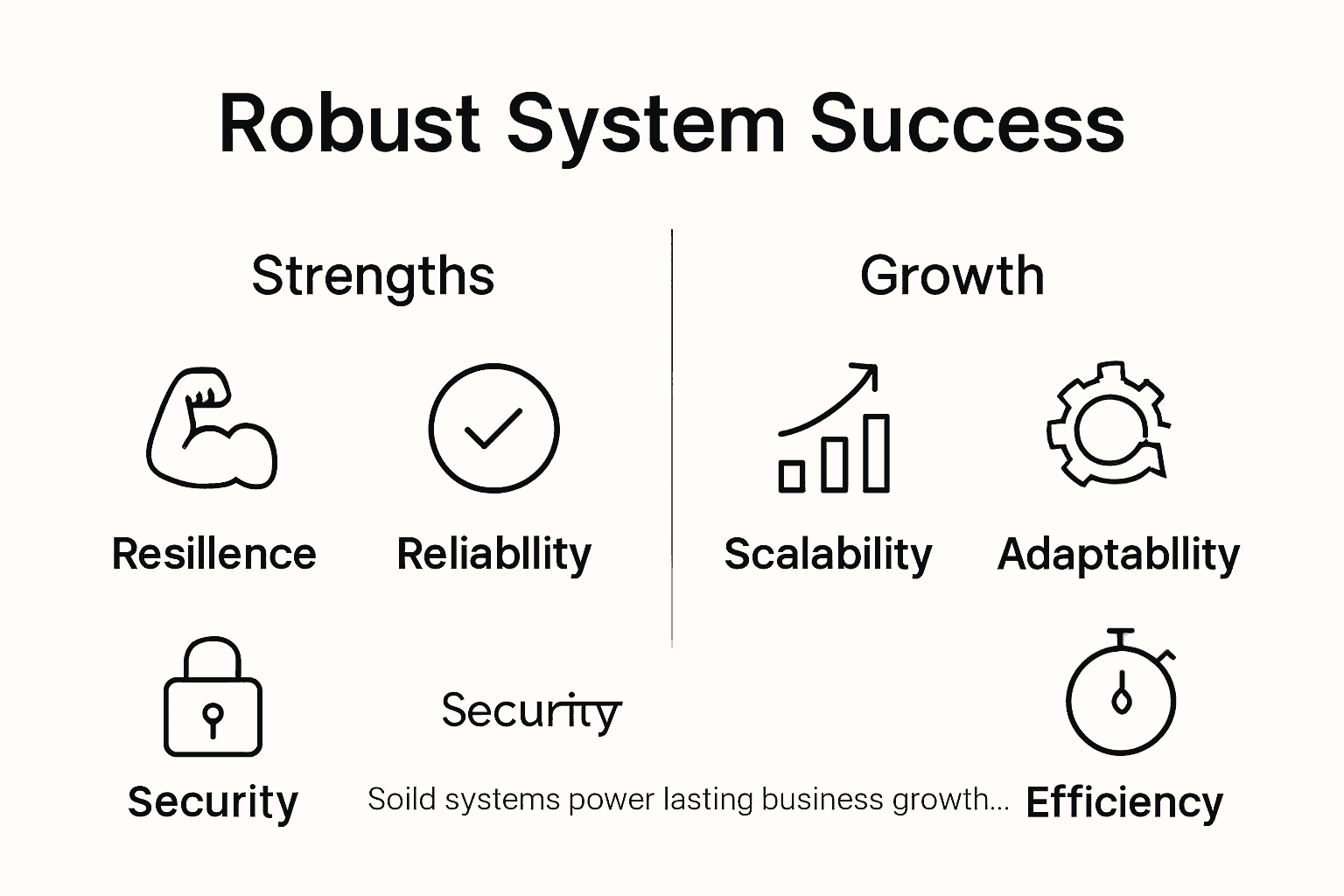
Build Robust Systems That Power Entrepreneurial Success
The article highlights the critical challenge many entrepreneurs face: fragile business systems that fail under pressure and limit growth opportunities. You want your entrepreneurial journey to be supported by adaptive, scalable, and resilient systems that reduce risk and foster lasting operational stability. These qualities align perfectly with the core pillars of a robust business architecture like modular design, fault tolerance, and continuous performance optimization.
At Freedom Sun, we understand the high-pressure landscape tech entrepreneurs navigate daily. Our Operating System framework is designed to transform your internal business infrastructure through three strategic pillars: MATH (financial clarity), MECHANICS (sales infrastructure), and MIND (leadership and mental resilience). By integrating these elements, you build an unshakable foundation that not only withstands disruptions but empowers sustainable growth without burnout.
Ready to move beyond fragile systems and create scalable solutions built on proven strategic design? Discover how Freedom Sun’s interactive training, diagnostic assessments, and supportive community can help you architect a business that thrives under pressure. Take control today with Freedom Sun and experience operational peace that elevates your leadership and preserves your wellbeing.
Frequently Asked Questions
What are robust business systems?
Robust business systems are strategic frameworks designed to maintain stability and performance while adapting to diverse operational conditions. They minimize risks, reduce vulnerabilities, and support sustainable business growth.
How do robust systems differ from fragile systems?
Robust systems remain operational under stress and can scale seamlessly, while fragile systems are prone to failure under minor pressure and may degrade in performance during growth.
What are the key benefits of implementing robust systems for tech entrepreneurs?
Key benefits include continuous operational stability, adaptive technological infrastructure, enhanced security protocols, consistent performance optimization, and risk mitigation against systemic failures.
What steps can I take to create scalable solutions in my business?
To create scalable solutions, design modular architectures, implement horizontal scaling strategies, establish automated resource allocation, and leverage cloud-native infrastructure to enhance flexibility and performance.