Financial Wellness: Equipping Leaders for Sustainable Growth

Over 60 percent of American entrepreneurs admit their financial knowledge is limited compared to larger business owners. This gap leaves many passionate innovators unprepared when managing complex business finances alongside personal obligations. Defining true financial wellness means more than just balancing the books. Here, you will discover clear strategies to elevate how American founders approach both personal and business financial wellbeing.
Table of Contents
- Defining Financial Wellness For Entrepreneurs
- Key Pillars Of Financial Wellness Success
- Personal Versus Business Financial Wellbeing
- Practical Strategies For Achieving Financial Wellness
- Risks, Warning Signs, And Common Mistakes
- Leadership Impact: Financial Wellness And Business Growth
Key Takeaways
| Point | Details |
|---|---|
| Financial Wellness | Entrepreneurs should view financial wellness as an integrated strategy that harmonizes personal and business finances for sustainable growth. |
| Key Components | Essential elements include strategic planning, risk management, and maintaining healthy cash reserves to navigate economic uncertainties effectively. |
| Personal vs. Business | Recognizing the interconnectedness of personal and business financial health can enhance overall resilience and decision-making. |
| Continuous Learning | Ongoing education and adaptation to financial trends are crucial for making informed financial decisions that support long-term success. |
Defining Financial Wellness for Entrepreneurs
Financial wellness represents a holistic approach to managing money that goes far beyond basic budgeting for entrepreneurs. It encompasses strategic financial thinking, proactive risk management, and developing a sustainable economic mindset that supports long-term business growth. Entrepreneurial financial literacy plays a critical role in transforming business potential into tangible economic success.
At its core, financial wellness means creating a comprehensive framework where personal and business finances operate in strategic harmony. This involves understanding cash flow dynamics, building robust financial systems, and developing decision-making skills that balance immediate operational needs with future growth objectives. Research indicates that entrepreneurs who cultivate advanced financial capabilities can more effectively navigate economic uncertainties and make informed investment choices.
The key components of financial wellness for entrepreneurs include:
- Developing a growth-oriented money mindset
- Creating predictable revenue streams
- Maintaining healthy cash reserves
- Understanding financial metrics and performance indicators
- Building personal and business credit strategically
- Implementing disciplined financial planning
Pro Tip - Financial Navigation: Treat your business finances like a living, dynamic system that requires consistent attention and strategic refinement, not a static set of numbers to be reviewed occasionally.
By embracing financial wellness, entrepreneurs transform money management from a reactive chore into a proactive growth strategy that supports both personal and professional aspirations.
Key Pillars of Financial Wellness Success
Financial wellness for entrepreneurs hinges on several critical pillars that transform financial management from a reactive task to a strategic growth mechanism. Entrepreneurial motivation research demonstrates that understanding these foundational elements can significantly enhance business performance and long-term sustainability.
The first pillar centers on strategic financial planning, which involves creating comprehensive roadmaps that align short-term operational needs with long-term business objectives. This requires developing robust financial forecasting skills, understanding cash flow management, and building adaptive financial systems that can respond quickly to market changes. Successful entrepreneurs recognize that financial planning is not a one-time event but a continuous process of assessment, adjustment, and strategic refinement.
Key pillars of financial wellness include:
- Financial Intelligence: Developing deep understanding of financial metrics
- Risk Management: Creating strategies to mitigate potential financial vulnerabilities
- Investment Mindset: Viewing financial resources as growth catalysts
- Continuous Learning: Staying updated on financial trends and strategies
- Diversification: Spreading financial risks across multiple channels
- Disciplined Execution: Consistently applying financial strategies
Pro Tip - Strategic Resource Allocation: Treat every financial decision as an investment in your business’s future, prioritizing resources that generate sustainable value and long-term growth potential.
Entrepreneurs who master these pillars transform financial management from a mundane administrative task into a powerful strategic tool for business expansion and personal economic empowerment.

Personal Versus Business Financial Wellbeing
Entrepreneurs often struggle to distinguish between personal and business financial wellness, yet these domains are deeply interconnected and mutually influential. Financial empowerment research reveals that an entrepreneur’s personal financial status can significantly impact their ability to secure business financing and navigate economic challenges.
The critical difference lies in perspective and management strategy. Personal financial wellness focuses on individual financial security, savings, debt management, and lifestyle sustainability. Business financial wellness, conversely, centers on revenue generation, profit optimization, cash flow management, and strategic investment. However, these domains are not isolated systems but interconnected ecosystems where personal financial habits directly influence business financial performance. Successful entrepreneurs recognize that personal financial discipline translates directly into business financial resilience.
Key distinctions between personal and business financial wellbeing include:
- Personal Finance: Individual income, personal debt, credit score, emergency funds
- Business Finance: Revenue streams, operational expenses, business credit, investment capital
- Overlap Areas: Financial mindset, risk tolerance, strategic planning skills
Pro Tip - Financial Boundary Setting: Create clear financial boundaries between personal and business accounts, treating them as related but distinct financial universes that require individual attention and strategic management.
Ultimately, entrepreneurs who master the nuanced relationship between personal and business financial wellness position themselves for sustainable growth, transforming financial management from a challenge into a strategic advantage.
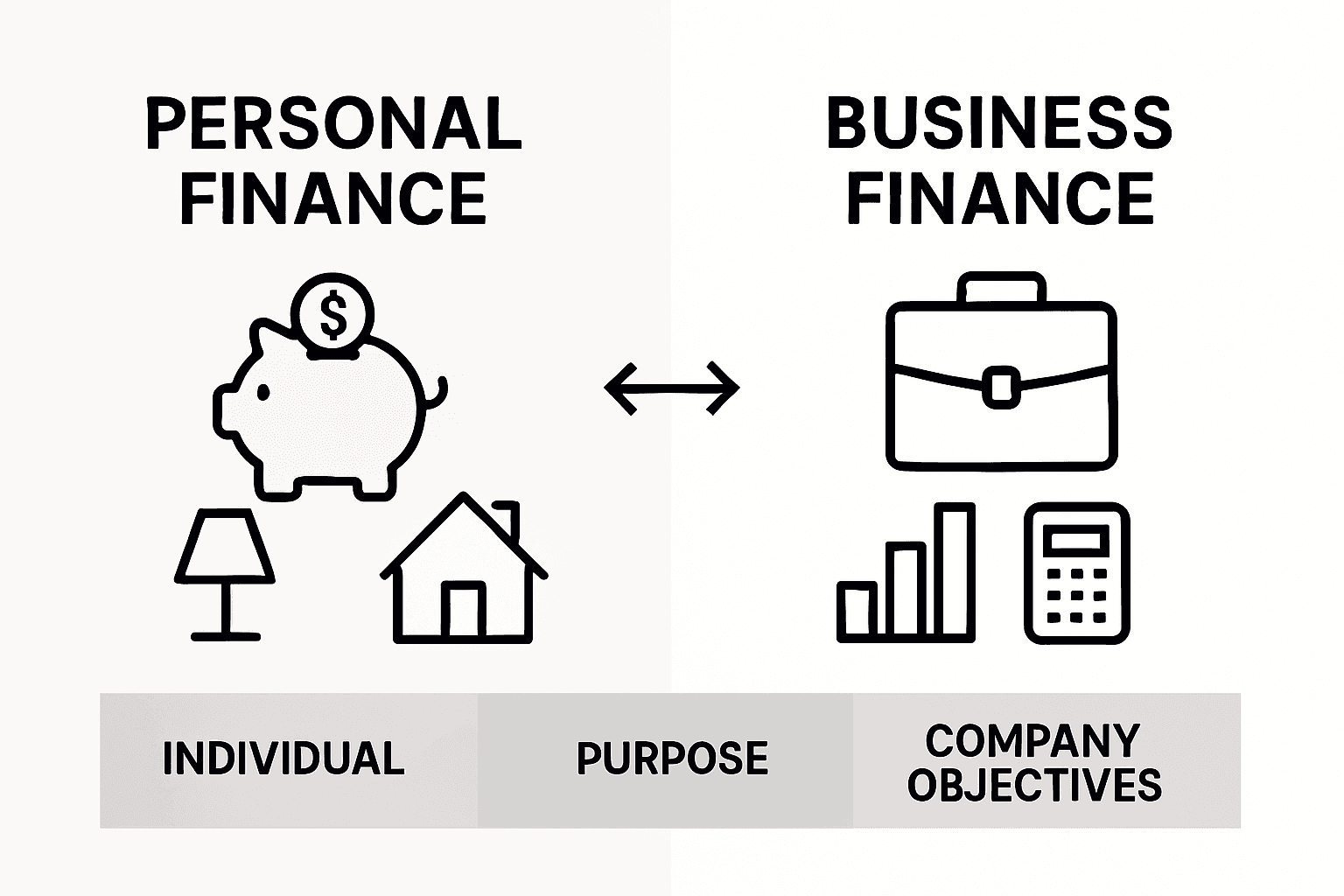
To better understand the distinctions and connections, here is a comparison of personal and business financial wellbeing for entrepreneurs:
| Aspect | Personal Financial Wellbeing | Business Financial Wellbeing | Overlap & Impact |
|---|---|---|---|
| Main Focus | Individual security and lifestyle | Revenue, profitability, and growth | Financial mindset and discipline |
| Risk Management | Emergency fund and insurance | Contingency plans and diversification | Strategic planning across both domains |
| Credit/Credit Score | Personal credit management | Building business credit deliberately | Credit history can affect business loans |
| Financial Tracking | Personal expenses and savings | Cash flow, expenses, and profit | Consistency in tracking builds resilience |
| Decision-Making Impact | Personal habits influence decisions | Business performance influences owner | Mutual reinforcement or vulnerability |
Practical Strategies for Achieving Financial Wellness
Achieving financial wellness requires a deliberate, strategic approach that goes beyond simple budgeting. Mathematical financial planning research suggests implementing systematic income allocation strategies that create sustainable financial frameworks for entrepreneurs.
The foundation of financial wellness lies in developing a holistic financial management system. This involves creating clear separation between personal and business finances, establishing robust tracking mechanisms, and building adaptive financial strategies that can evolve with changing business landscapes. Successful entrepreneurs understand that financial wellness is not about perfection but about consistent, intentional financial behaviors that compound over time.
Practical strategies for achieving financial wellness include:
- Income Segmentation: Allocate income across multiple financial priorities
- Debt repayment
- Emergency savings
- Business reinvestment
- Personal development
- Automated Financial Systems: Set up automatic transfers and investments
- Regular Financial Audits: Monthly review of financial performance
- Diversified Income Streams: Develop multiple revenue channels
- Continuous Financial Education: Stay updated on financial strategies
- Risk Management: Build robust insurance and contingency plans
Pro Tip - Financial Rhythm: Treat your financial management like a strategic dance, creating predictable patterns of income allocation and investment that build long-term wealth and business resilience.
Transforming financial wellness from a theoretical concept to a practical reality requires commitment, strategic thinking, and a willingness to continuously learn and adapt financial approaches.
Risks, Warning Signs, and Common Mistakes
Entrepreneurial financial risks can emerge from multiple complex sources, often rooted in cognitive biases and strategic misconceptions. Research examining entrepreneurial finance perspectives reveals that many financial mistakes stem from ideological blind spots and limited decision-making frameworks.
The most critical warning signs of potential financial instability include persistent cash flow challenges, inability to separate personal and business expenses, over-reliance on single revenue streams, and consistent emotional decision-making around money. Successful entrepreneurs develop early warning detection systems that allow them to identify and address financial vulnerabilities before they become critical problems. This requires a combination of rigorous financial tracking, emotional intelligence, and willingness to make strategic course corrections.
Common financial risks and mistakes entrepreneurs frequently encounter include:
- Undercapitalization: Insufficient financial reserves to weather business fluctuations
- Poor Cash Flow Management: Inconsistent income tracking and unpredictable spending
- Mixing Personal and Business Finances: Blurring financial boundaries
- Inadequate Financial Planning: Lack of strategic budgeting and forecasting
- Overconfidence in Revenue Projections: Unrealistic growth expectations
- Neglecting Emergency Funds: Failing to build financial safety nets
Pro Tip - Risk Radar: Develop a monthly financial diagnostic process that systematically evaluates your business’s financial health, treating potential risks as opportunities for strategic refinement.
Navigating financial risks requires continuous learning, strategic adaptability, and a commitment to maintaining clear, disciplined financial boundaries that protect both personal and business economic ecosystems.
The following table summarizes core strategies for entrepreneurs to proactively avoid common financial mistakes:
| Strategy | Business Benefit | Example Practice |
|---|---|---|
| Regular Cash Flow Analysis | Prevents financial shortfalls | Monthly review of inflows/outflows |
| Separate Accounts Setup | Reduces confusion and risk | Dedicated business checking account |
| Conservative Revenue Forecasts | Promotes realistic growth planning | Base projections on recent history |
| Ongoing Risk Assessment | Early detection of vulnerabilities | Scheduled quarterly risk review |
| Emergency Fund Reserve | Enhances resilience against setbacks | 3-6 months of expenses saved |
Leadership Impact: Financial Wellness and Business Growth
Financial empowerment research reveals that leadership’s approach to financial wellness directly correlates with sustainable business growth, transforming monetary management from a tactical function to a strategic competitive advantage. Exceptional leaders understand that financial wellness is not merely about numbers, but about creating a holistic ecosystem of economic thinking that permeates every aspect of organizational culture.
The connection between leadership and financial wellness is fundamentally about mindset and systemic thinking. Successful leaders treat financial wellness as a dynamic, integrated strategy rather than a static set of accounting practices. This approach involves developing organizational capabilities that can anticipate financial challenges, create adaptive revenue models, and build resilient economic frameworks that can withstand market fluctuations.
Key leadership dimensions of financial wellness include:
- Strategic Financial Vision: Developing comprehensive economic roadmaps
- Risk Intelligence: Proactively identifying and mitigating financial vulnerabilities
- Adaptive Resource Allocation: Dynamically managing financial resources
- Organizational Financial Culture: Embedding financial literacy across all levels
- Continuous Learning: Staying updated on emerging financial technologies and strategies
- Transparent Communication: Maintaining clear financial reporting and expectations
Pro Tip - Leadership Financial Alignment: Create a quarterly financial wellness review that treats your organization’s economic health as a living, evolving system requiring consistent strategic attention and nuanced understanding.
Ultimately, financial wellness emerges when leaders view economic management not as a constraint, but as a powerful mechanism for driving innovation, building trust, and creating sustainable competitive advantage.
Transform Your Financial Wellness Into Sustainable Leadership Success
The article highlights the challenge entrepreneurs face in mastering financial wellness while balancing strategic growth and personal resilience. If you struggle to separate your business and personal finances, manage cash flow effectively, or sustain a growth-oriented financial mindset you are not alone. These pain points reveal the essential need for disciplined financial planning, risk management, and developing a dynamic leadership approach that views finances as a living system, not just numbers on a page.
At Freedom Sun, we specialize in empowering leaders like you to transform financial chaos into strategic clarity. Through our comprehensive coaching and CEO mentorship programs, you gain the tools necessary to build robust operational systems and deepen financial intelligence that underpins sustainable business growth. Our holistic approach connects your leadership psychology with advanced financial strategies so you can confidently navigate risks and make intentional decisions that accelerate growth.
Ready to elevate your financial wellness and leadership impact? Visit Freedom Sun and explore how our transformational workshops and strategic partnerships guide entrepreneurs toward autonomous mastery. Don’t wait to turn financial stress into empowered action. Start your journey now with Freedom Sun.
Frequently Asked Questions
What is financial wellness for entrepreneurs?
Financial wellness for entrepreneurs is a holistic approach to managing finances that includes strategic financial thinking, risk management, and developing sustainable practices for lasting business growth.
How can entrepreneurs achieve financial wellness?
Entrepreneurs can achieve financial wellness by implementing strategies such as income segmentation, automated financial systems, regular audits, diversified income streams, and continuous financial education.
What are the key components of financial wellness for business leaders?
Key components include developing a growth-oriented money mindset, creating predictable revenue streams, maintaining healthy cash reserves, understanding financial metrics, and disciplined financial planning.
Why is separating personal and business finances important for entrepreneurs?
Separating personal and business finances is crucial because it helps manage risks, enhances clarity in financial reporting, and ensures that personal financial habits do not negatively impact business financial performance.