Financial Resilience: Why It Matters for Entrepreneurs

Over 60 percent of American businesses admit they are unprepared for sudden financial shocks. With economic uncertainty always looming, understanding true financial resilience is more urgent than ever for every American entrepreneur. Explore what it really takes to build sturdy business foundations and discover modern, proactive strategies to keep your company steady even when the markets are anything but predictable.
Table of Contents
- Defining Financial Resilience In Business
- Types Of Financial Resilience Strategies
- Core Characteristics And How It Works
- Building Resilient Financial Systems For Growth
- Common Pitfalls And How To Avoid Them
Key Takeaways
| Point | Details |
|---|---|
| Financial Resilience | Financial resilience encompasses a business’s ability to adapt and thrive through economic challenges by maintaining operational stability and proactive strategies. |
| Strategic Financial Tools | Companies should develop a toolkit that includes liquidity management, cost optimization, and proactive risk planning to navigate economies effectively. |
| Technology Integration | Modern businesses must invest in technological solutions to enhance financial agility and foster rapid decision-making in changing market conditions. |
| Continuous Learning | Entrepreneurs need to prioritize ongoing assessment and education in financial management to avoid pitfalls and maintain business viability. |
Defining Financial Resilience in Business
Financial resilience represents a business’s capacity to withstand economic disruptions, absorb financial shocks, and adapt strategically during challenging market conditions. At its core, this concept goes beyond simple survival - it’s about maintaining operational stability and positioning your enterprise to capitalize on opportunities even amid uncertainty.
Researchers examining corporate financial dynamics have developed nuanced perspectives on resilience. A comprehensive study investigating corporate resilience strategies suggests that financial resilience isn’t just about having cash reserves, but creating robust systems that can quickly pivot and respond to unexpected challenges. This involves maintaining flexible financial structures, diversified revenue streams, and proactive risk management approaches.
Building financial resilience requires entrepreneurs to develop multifaceted strategies. Key components include maintaining strong cash flow management, creating emergency financial buffers, developing diverse income streams, and continuously monitoring financial health indicators. Successful businesses don’t just react to market changes - they anticipate and prepare for potential disruptions through strategic financial planning and adaptive thinking.
Pro Business Financial Planning Tip: Develop a comprehensive financial dashboard that tracks key performance indicators in real time, allowing you to make rapid, data-driven decisions during economic fluctuations and maintain your business’s financial agility.
Types of Financial Resilience Strategies
Financial resilience is not a one-size-fits-all approach, but a dynamic set of strategic methods tailored to each business’s unique challenges and opportunities. Entrepreneurs must develop a comprehensive toolkit of financial strategies that can adapt and respond to changing economic landscapes.
Research examining financial resilience strategies highlights several critical approaches businesses can implement. These strategies typically fall into three primary categories: liquidity management, cost optimization, and proactive risk planning. Liquidity management involves maintaining sufficient cash reserves and creating flexible financial structures that allow quick pivoting during economic uncertainties.
Modern businesses are increasingly recognizing the importance of digital transformation in building financial resilience. Strategic technology investments and digital skill development have become crucial components of financial adaptation, enabling companies to create more agile and responsive financial ecosystems. This might include implementing advanced financial tracking software, developing multiple revenue streams, and continuously upskilling teams to leverage emerging technological tools.
Effective financial resilience requires a holistic approach that combines strategic planning, technological integration, and continuous learning. Entrepreneurs must remain vigilant, regularly reassess their financial strategies, and be prepared to make rapid adjustments in response to market shifts.
Pro Financial Strategy Tip: Create a quarterly financial flexibility audit that reviews your current strategies, identifies potential vulnerabilities, and proactively develops contingency plans to maintain business stability during unexpected economic challenges.
Here’s a comparison of key financial resilience strategies and their business benefits:
| Strategy Type | Main Objective | Business Impact |
|---|---|---|
| Liquidity Management | Ensure ready access to cash | Increases ability to handle cash shocks |
| Cost Optimization | Control operational expenses | Improves profitability and cash retention |
| Proactive Risk Planning | Anticipate and mitigate risks | Reduces likelihood of financial crises |
| Digital Transformation | Embrace technology in finance | Boosts agility and decision-making speed |
Core Characteristics and How It Works
Financial resilience operates as a dynamic system of strategic protections and adaptive mechanisms that enable businesses to navigate economic uncertainties with confidence and strategic foresight. It’s not simply about surviving challenges, but about creating a robust framework that transforms potential financial threats into opportunities for strategic repositioning.

Mathematical modeling of financial allocation strategies reveals that successful financial resilience follows systematic principles of balanced resource management. These core characteristics include maintaining flexible financial structures, developing multiple revenue streams, creating strategic financial buffers, and continuously monitoring economic indicators that might impact business performance. Entrepreneurs who master these characteristics can effectively anticipate and mitigate potential financial risks before they become critical challenges.
Digital transformation research highlights that modern financial resilience is increasingly dependent on technological adaptability. This means investing in digital skills, implementing advanced financial tracking technologies, and creating agile systems that can quickly respond to market shifts. Successful businesses view their financial resilience as a dynamic ecosystem that requires constant cultivation, learning, and strategic refinement.
The mechanics of financial resilience involve continuous assessment, proactive planning, and strategic flexibility. Entrepreneurs must develop a holistic approach that integrates financial monitoring, risk assessment, technological innovation, and adaptive strategic planning. This approach transforms financial management from a reactive process to a proactive, strategic advantage.
Pro Strategic Planning Tip: Develop a comprehensive financial dashboard that tracks real-time performance metrics, potential risk indicators, and emerging market opportunities, enabling rapid, data-driven decision-making and maintaining your business’s financial agility.
Building Resilient Financial Systems for Growth
Building resilient financial systems requires entrepreneurs to create comprehensive, adaptive frameworks that transform potential vulnerabilities into strategic opportunities. This goes beyond traditional financial planning, demanding a holistic approach that integrates proactive risk management, technological innovation, and continuous learning.
Financial literacy research examining entrepreneurial financial education reveals critical strategies for developing robust financial systems. Successful entrepreneurs focus on developing key infrastructure that includes:
- Advanced financial tracking mechanisms
- Flexible cash flow management strategies
- Diversified revenue stream development
- Continuous skills and knowledge enhancement
- Adaptive risk mitigation protocols
The core of building resilient financial systems lies in creating redundancy and adaptability. This means developing multiple income streams, maintaining substantial financial buffers, and implementing dynamic financial management technologies that can rapidly adjust to changing economic conditions. Entrepreneurs must view their financial systems as living, breathing ecosystems that require constant monitoring, refinement, and strategic repositioning.
Technological integration plays a crucial role in modern financial resilience. By leveraging sophisticated financial tracking tools, predictive analytics, and automated reporting systems, businesses can create early warning mechanisms that identify potential financial risks before they become critical challenges. This proactive approach transforms financial management from a reactive process to a strategic competitive advantage.
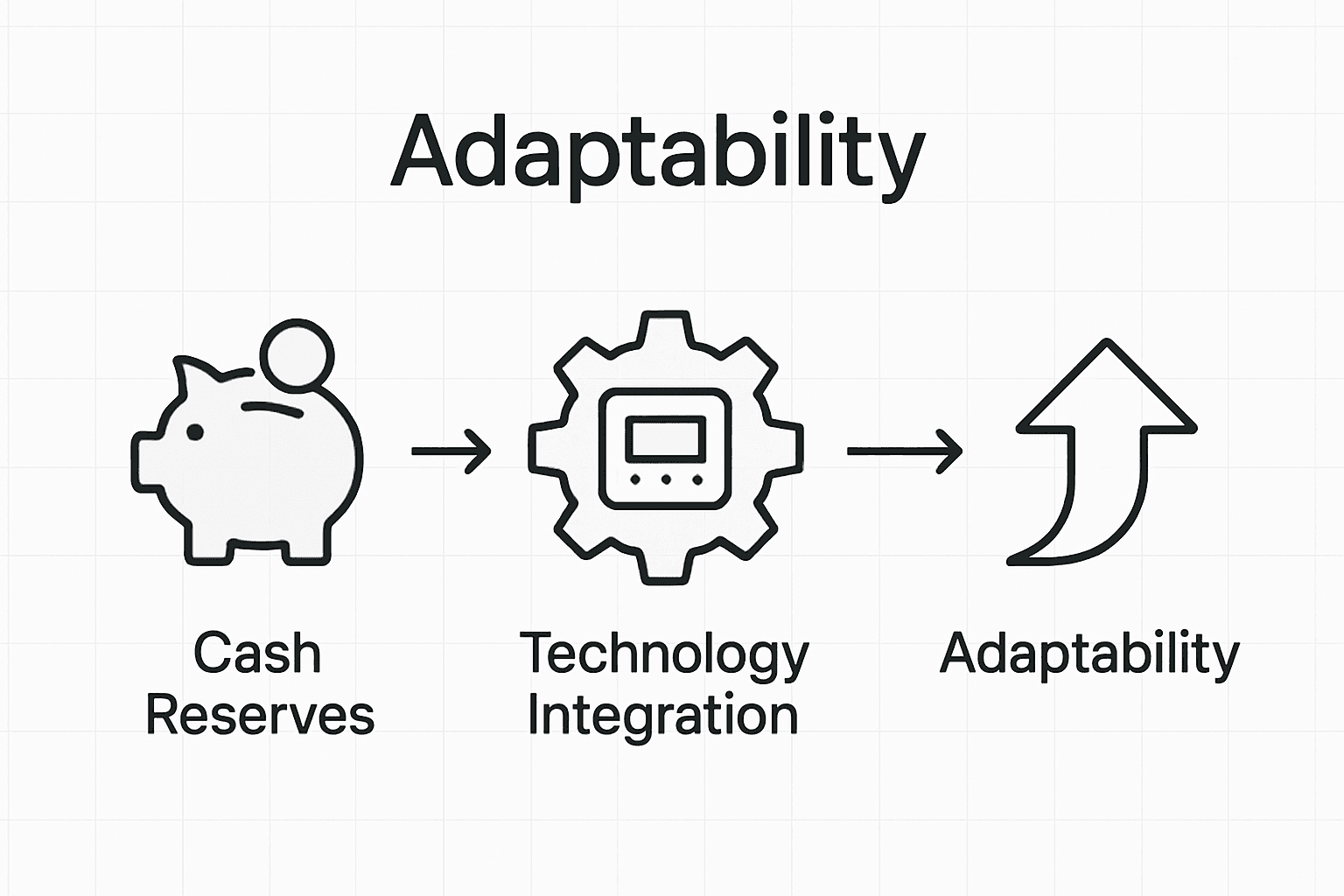
Pro Strategic Development Tip: Create a quarterly financial ecosystem audit that comprehensively reviews your financial systems, identifies potential vulnerabilities, and develops adaptive strategies to maintain business financial health and growth potential.
Common Pitfalls and How to Avoid Them
Financial resilience is a delicate balance that requires strategic awareness and proactive management. Entrepreneurs frequently encounter predictable challenges that can derail their financial stability if not carefully navigated and addressed with intentional strategies.
Research exploring systemic financial risk mechanisms highlights several critical vulnerabilities that entrepreneurs must understand and mitigate. The most common pitfalls include:
- Insufficient financial diversification
- Overlooking emergency cash reserves
- Reactive instead of proactive financial planning
- Neglecting continuous financial education
- Underestimating potential market disruptions
Strategic managerial research on financial resilience reveals that many entrepreneurs fail by treating financial planning as a static process rather than a dynamic, evolving strategy. Successful businesses view financial management as an ongoing journey of adaptation, requiring constant reassessment and strategic realignment.
The most dangerous pitfall is complacency - assuming past success guarantees future performance. Entrepreneurs must develop a mindset of perpetual learning and flexibility, creating financial systems that can quickly pivot in response to unexpected market changes. This means building redundancy into financial structures, maintaining multiple revenue streams, and continuously upgrading skills and technological capabilities.
Technological vulnerability represents another significant risk. Businesses that rely on outdated financial tracking systems or fail to invest in advanced analytics tools leave themselves exposed to potential systemic risks. Modern financial resilience demands sophisticated technological integration that provides real-time insights and predictive capabilities.
Pro Risk Mitigation Tip: Implement a monthly financial health check that systematically reviews your business’s financial indicators, identifies potential vulnerabilities, and develops immediate corrective strategies to maintain robust financial performance.
Below is a summary of common financial resilience pitfalls and recommended actions to avoid them:
| Pitfall | Example Situation | Prevention Action |
|---|---|---|
| Lack of Diversification | Relying on a single income source | Develop multiple revenue channels |
| Ignoring Emergency Reserves | No contingency fund available | Build and maintain cash buffers |
| Outdated Technology | Using legacy accounting systems | Invest in modern financial software |
| Complacency | No review of strategies | Regularly audit and adjust approaches |
Strengthen Your Financial Resilience with Strategic Leadership Support
The article highlights the critical challenge entrepreneurs face in building financial resilience through proactive planning, diversified income, and adaptive financial systems. If you feel overwhelmed by maintaining operational stability while also seeking growth opportunities you are not alone. Many high-performing leaders struggle with transforming complex financial data into clear, confident decisions that empower their business to thrive during uncertainty.
At freedomsun.co, we understand that true financial resilience goes beyond numbers. It requires mastering the balance between strategic business systems and inner leadership clarity. Our premium coaching platform offers precisely this holistic approach through CEO mentorship focused on operational mastery and financial clarity. By integrating proven frameworks with deep psychological insight, we help entrepreneurs like you build scalable, agile financial strategies that anticipate risks as well as capitalize on opportunities.
Make the leap from reactive financial management to confident, strategic leadership today. Explore how our transformational workshops and targeted strategic projects can elevate your financial resilience and operational execution. Visit freedomsun.co now to discover tailored solutions for sustained growth and empowered leadership.
Frequently Asked Questions
What is financial resilience in business?
Financial resilience is a business’s ability to withstand economic disruptions, absorb financial shocks, and adapt strategically during market challenges to maintain operational stability and capitalize on opportunities.
Why is financial resilience important for entrepreneurs?
Financial resilience is crucial for entrepreneurs as it helps them navigate uncertainties, manage risks effectively, and ensure the long-term sustainability of their businesses even during economic downturns.
How can businesses build financial resilience?
Businesses can build financial resilience by maintaining strong cash flow management, creating emergency financial buffers, developing diversified revenue streams, and utilizing proactive risk management strategies.
What are common pitfalls in achieving financial resilience?
Common pitfalls include insufficient financial diversification, overlooking emergency cash reserves, treating financial planning as static, ignoring ongoing financial education, and underestimating potential market disruptions.
Recommended
- 7 Essential Money Mindset Tips for Entrepreneurs’ Success - Simone CR
- How to Grow My Business for Sustainable Success
- 7 Essential Personal Growth Techniques for Entrepreneurs
- 7 Powerful Examples of Money Mindset Shifts for Entrepreneurs
- Role of Accountancy for Growth – Impact on Business Success
- Asset Protection for Business Owners: Safeguarding Personal Assets
- Master the Commercial Financing Workflow for Success - Craigburn Capital