Job Costing for Founders: Achieving Financial Clarity

Scaling a fast-growing company often brings as many financial surprises as it does opportunities for growth. Clear visibility into project expenses is crucial for founders who want operational stability while protecting themselves and their teams from burnout. Accurate tracking through job costing—including labor, materials, and overhead—empowers entrepreneurs to identify profitable projects, control cost overruns, and make smarter budgeting decisions for lasting success.
Table of Contents
- Defining Job Costing In Modern Business
- Job Costing Methods And Variations
- Setting Up A Job Costing System
- Best Practices For Effective Job Tracking
- Common Pitfalls And Profitability Risks
Key Takeaways
| Point | Details |
|---|---|
| Understanding Job Costing | Job costing provides a detailed financial view of individual projects by tracking direct labor, direct materials, and overhead costs, allowing businesses to assess project profitability accurately. |
| Job Costing Methods | Founders can choose from traditional job-order costing for direct project expense tracking or activity-based costing for a more detailed overhead analysis to enhance financial precision. |
| Implementing Job Costing Systems | A robust job costing system requires clear cost categorization, systematic data collection, and real-time performance monitoring to facilitate effective expense tracking and decision-making. |
| Avoiding Common Pitfalls | Businesses should be wary of inaccurate labor tracking, faulty overhead allocation, and manual expense recording, utilizing automated systems and standardized formulas to enhance financial accuracy and control. |
Defining Job Costing in Modern Business
Job costing represents a strategic financial tracking method that enables businesses to understand the precise economic landscape of individual projects. At its core, job costing tracks comprehensive project expenses by meticulously documenting labor, materials, and overhead costs associated with specific assignments or orders.
Unlike broad accounting approaches, job costing provides granular financial visibility. Businesses can break down project expenses into three primary categories: direct labor (wages paid to workers directly involved), direct materials (physical resources consumed), and overhead costs (indirect expenses like equipment usage, facility maintenance, and administrative support). This detailed approach allows founders to calculate the true profitability of each project with remarkable precision.
The power of job costing extends beyond simple expense tracking. Detailed cost monitoring enables companies to control potential budget overruns before they escalate, making it an essential tool for financial management. By understanding the exact financial dynamics of each project, entrepreneurs can make data-driven decisions about pricing, resource allocation, and future business strategies.
Pro tip: Create a standardized job costing template for your business to ensure consistent and accurate expense tracking across all projects.
Job Costing Methods and Variations
Founders navigating financial complexity have multiple job costing approaches at their disposal, each offering unique insights into project economics. Traditional job-order costing and activity-based costing (ABC) represent two primary methodologies that help businesses track and allocate expenses with increasing precision.
Traditional job-order costing focuses on tracking expenses for distinct jobs or batches. This method assigns costs directly to specific projects by calculating labor, materials, and overhead expenses. In contrast, activity-based costing provides a more nuanced approach. ABC allocates overhead costs based on the actual activities generating those expenses, rather than using broad approximations like labor hours or machine time. This granular method enables businesses to understand the true cost drivers behind each project with remarkable accuracy.
Advanced cost accounting frameworks now integrate dynamic adjustment mechanisms and enterprise resource planning (ERP) systems. These modern variations enhance real-time cost tracking, allowing founders to make more responsive financial decisions. By combining technological integration with sophisticated allocation strategies, businesses can develop more flexible and accurate job costing models that adapt to complex operational environments.
Pro tip: Implement a digital job costing system that allows real-time expense tracking and automatic overhead allocation to maximize financial visibility.
Here’s a quick comparison of major job costing methods used in modern businesses:
| Method | Cost Allocation Approach | Strengths | Ideal Use Case |
|---|---|---|---|
| Traditional Job-Order | Assigns costs per job or batch | Simple, direct tracking | Custom projects, construction |
| Activity-Based Costing | Allocates costs by activity level | Nuanced overhead analysis | Manufacturing, service industries |
| ERP-Integrated Models | Real-time digital allocation | Automated, dynamic insights | Large enterprises, tech-driven ops |
Setting Up a Job Costing System
Implementing an effective job costing system requires strategic planning and meticulous attention to financial details. Founders must create a comprehensive framework that captures every financial nuance of project-specific expenses, transforming raw data into actionable business intelligence.
The foundational steps for establishing a robust job costing system involve three critical components: precise cost categorization, systematic data collection, and continuous performance monitoring. First, businesses must define clear expense categories including direct labor, direct materials, and overhead costs. These categories provide the structural backbone for accurately tracking project-specific financial performance. Next, implement a standardized method for recording expenses, such as creating unique job order numbers that allow granular tracking of each project’s financial journey.

Cost estimation and variance analysis represent the most sophisticated aspects of job costing implementation. By comparing actual expenses against initial project estimates, founders can identify potential budget overruns, optimize resource allocation, and develop more accurate pricing strategies. Modern job costing systems leverage technology to enable real-time expense tracking, automated reporting, and sophisticated financial insights that transform raw numbers into strategic decision-making tools.
Pro tip: Select accounting software with built-in job costing capabilities that integrates seamlessly with your existing financial infrastructure to minimize manual data entry and maximize tracking accuracy.
Best Practices for Effective Job Tracking
Continuous performance monitoring transforms job costing from a passive accounting exercise into a dynamic strategic management tool. Founders must develop a comprehensive tracking system that goes beyond simple expense recording, creating a holistic approach to understanding project performance, resource allocation, and financial efficiency.
Successful job tracking requires implementing several key strategies. First, establish real-time tracking mechanisms that capture expenses and performance metrics instantly. This means creating digital dashboards that provide immediate visibility into project costs, labor hours, material expenses, and overhead allocations. Develop standardized reporting templates that allow quick comparison between projected and actual expenses, enabling rapid interventions when projects start to deviate from initial budgets.
Technology plays a crucial role in modern job tracking approaches. Advanced digital platforms can integrate multiple data sources, providing comprehensive insights that extend beyond traditional financial metrics. By combining expense tracking with performance analytics, productivity measurements, and resource utilization rates, founders can create a multidimensional view of project economics. Sophisticated tracking strategies enable businesses to move from reactive cost management to proactive financial planning, identifying potential issues before they become significant problems.
Pro tip: Implement a cloud-based job tracking system that offers real-time reporting, automated alerts for budget variances, and integrated analytics to support data-driven decision making.
Common Pitfalls and Profitability Risks
Job costing implementation challenges can significantly threaten a business’s financial stability if not carefully managed. Founders must recognize that sophisticated financial tracking involves more than simply recording expenses - it requires a strategic approach to understanding and mitigating potential risks that could erode profitability.
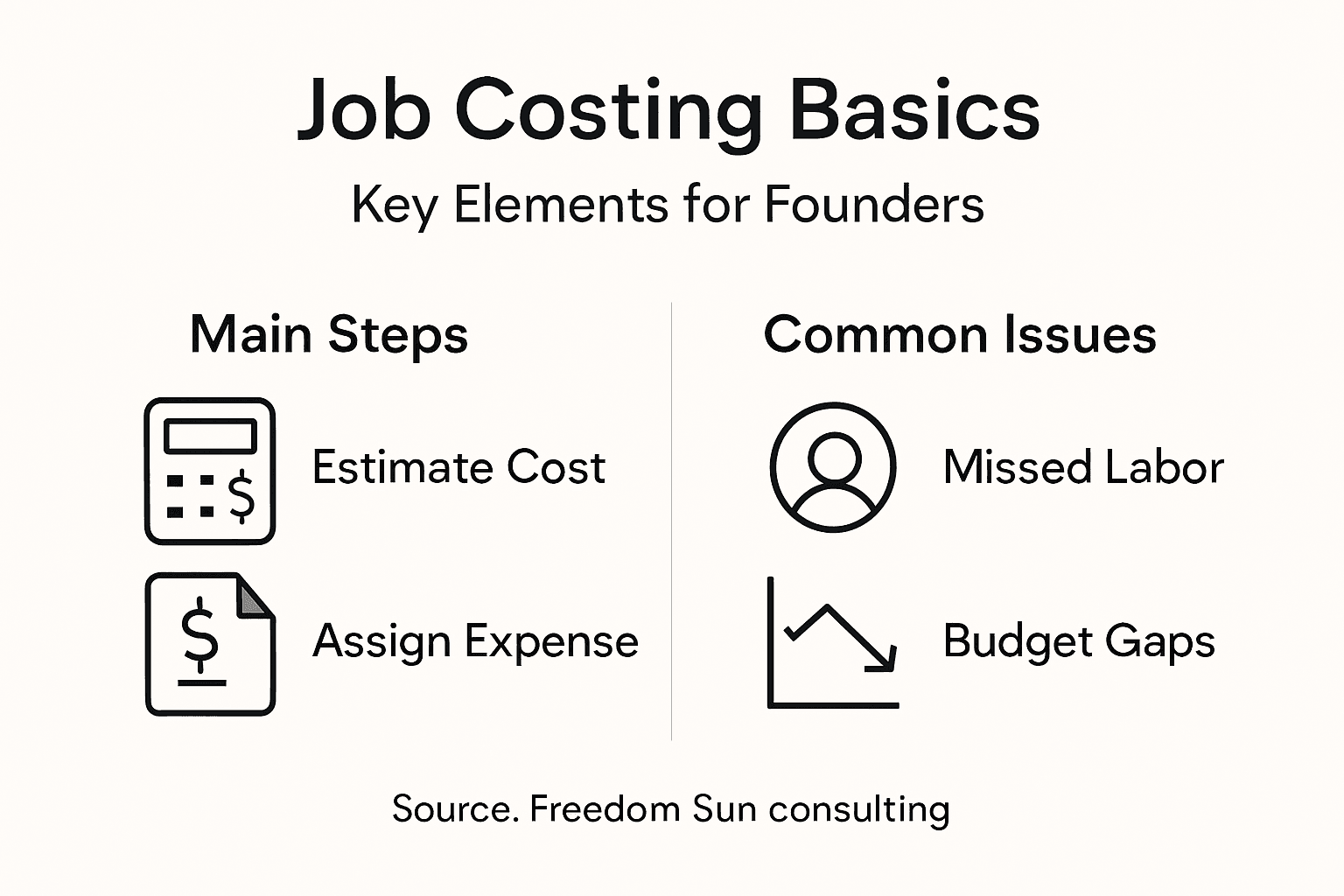
Critical pitfalls in job costing emerge from several key areas of vulnerability. Inaccurate labor tracking represents one of the most common risks, where businesses frequently underestimate the true cost of workforce hours. Manual time reporting systems are particularly prone to errors, leading to significant discrepancies between projected and actual project expenses. Overhead cost allocation presents another substantial challenge, with many founders struggling to distribute indirect expenses accurately across different projects, potentially creating hidden financial leaks that gradually compromise overall business performance.
Strategic cost monitoring techniques can help founders proactively identify and mitigate these risks. Digital tools now enable real-time expense tracking, providing immediate insights into potential budget deviations. Implementing robust change order management processes and conducting frequent budget reviews can transform job costing from a reactive accounting exercise into a powerful strategic planning mechanism. By developing a comprehensive understanding of project economics, businesses can create more accurate pricing models, improve resource allocation, and protect their bottom line from unexpected financial drains.
Pro tip: Conduct monthly job cost variance analysis to quickly identify and address potential financial discrepancies before they become significant profit-threatening issues.
The table below summarizes typical pitfalls in job costing and proven solutions to address them:
| Pitfall | Impact on Profitability | Recommended Solution |
|---|---|---|
| Inaccurate labor tracking | Cost overruns, reduced margins | Automated time entry systems |
| Faulty overhead allocation | Hidden budget leaks | Standardized allocation formulas |
| Manual expense recording | Human errors, data loss | Integrated accounting software |
Gain True Financial Clarity with Job Costing and Freedom Sun
Navigating the complexities of job costing demands more than just tracking expenses. If you struggle with inaccurate labor tracking, confusing overhead allocation, or lack real-time financial insights, you are not alone. These challenges directly impact your ability to understand project profitability and make confident pricing decisions. This article sheds light on overcoming those issues through detailed cost categories and modern tracking techniques.
At Freedom Sun, we recognize that foundational financial clarity is essential for entrepreneurial founders who want to transform their businesses without burnout. Our unique Operating System framework integrates MATH (financial clarity), MECHANICS (systems infrastructure), and MIND (leadership resilience) to help you build robust job costing systems that empower strategic decisions. By shifting from reactive bookkeeping to automated strategic management, you gain control over your internal systems and unlock sustainable wealth with peace of mind.
Looking to strengthen your job costing strategy and elevate your financial leadership? Explore how our expertly designed financial systems and interactive training can become your strategic partner in achieving scalable profit and operational stability. Start your journey toward system sovereignty and profitable peace today by visiting Freedom Sun and discover the transformative power of building your own financial Operating System.
Frequently Asked Questions
What is job costing?
Job costing is a financial tracking method that enables businesses to monitor and analyze the specific costs associated with individual projects, including labor, materials, and overhead expenses.
How can I implement an effective job costing system?
To implement an effective job costing system, begin by categorizing expenses into direct labor, direct materials, and overhead costs. Utilize standardized job order numbers for tracking and integrate accounting software that supports real-time expense tracking.
What are the common methods of job costing?
The main methods of job costing include Traditional Job-Order Costing, which tracks expenses for specific jobs directly, and Activity-Based Costing (ABC), which allocates overhead based on actual activities related to costs.
What are some common pitfalls in job costing?
Common pitfalls in job costing include inaccurate labor tracking, faulty overhead allocation, and reliance on manual expense recording. These can lead to cost overruns and financial discrepancies. To mitigate these risks, implement automated systems and conduct regular budget reviews.