CRM for Consultants: Streamlining Client Success

Every consultant and coach knows the challenge of juggling client data, emails, and progress notes across countless tools. Searching for a single source of truth can feel frustrating and time-consuming. CRM systems offer a smarter way forward by providing a unified platform that integrates key business functions for personalized client management. Modern CRMs are designed with flexibility in mind, helping professionals focus on meaningful work and cultivate lasting relationships instead of getting stuck in tedious administrative tasks.
Table of Contents
- Defining CRM For Consultants And Coaches
- Choosing The Right CRM Platform
- Essential CRM Features For Consultants
- Integrating CRM With Consulting Workflows
- Common CRM Mistakes And How To Avoid Them
Key Takeaways
| Point | Details |
|---|---|
| CRM Systems Enhance Management | CRM systems for consultants streamline client interactions by centralizing data, improving productivity, and eliminating scattered tools. |
| Choosing the Right Features | Focus on features that align with your workflow, including client tracking and reporting tools, to drive business growth. |
| Integration is Key | Effective CRM integration involves aligning the platform with existing workflows and ensuring a seamless data flow. |
| Avoid Common Pitfalls | To maximize CRM effectiveness, ensure proper customization, user training, and regular data quality checks. |
Defining CRM for Consultants and Coaches
Customer Relationship Management (CRM) for consultants and coaches represents a strategic approach to managing client interactions, data, and workflows. Unlike traditional business software, these specialized systems focus on the unique needs of service-based professionals who rely heavily on personalized client relationships.
A CRM designed for consultants is fundamentally about transforming how professionals manage client interactions. It goes beyond simple contact tracking, integrating multiple critical business functions:
- Lead management and tracking
- Sales pipeline visualization
- Communication history logging
- Client interaction documentation
- Project milestone tracking
- Automated follow-up scheduling
For independent coaches and consultants, CRM systems provide a centralized platform that eliminates scattered spreadsheets, email threads, and disconnected tools. These systems enable professionals to create a seamless, systematic approach to client management without getting bogged down in administrative tasks.
Modern CRMs for consultants are built with flexibility in mind. They recognize that each coaching or consulting practice operates uniquely, requiring adaptable tools that can scale with the business. Whether you’re managing a handful of high-touch clients or building a growing practice with multiple team members, the right CRM becomes an essential strategic partner in your professional ecosystem.
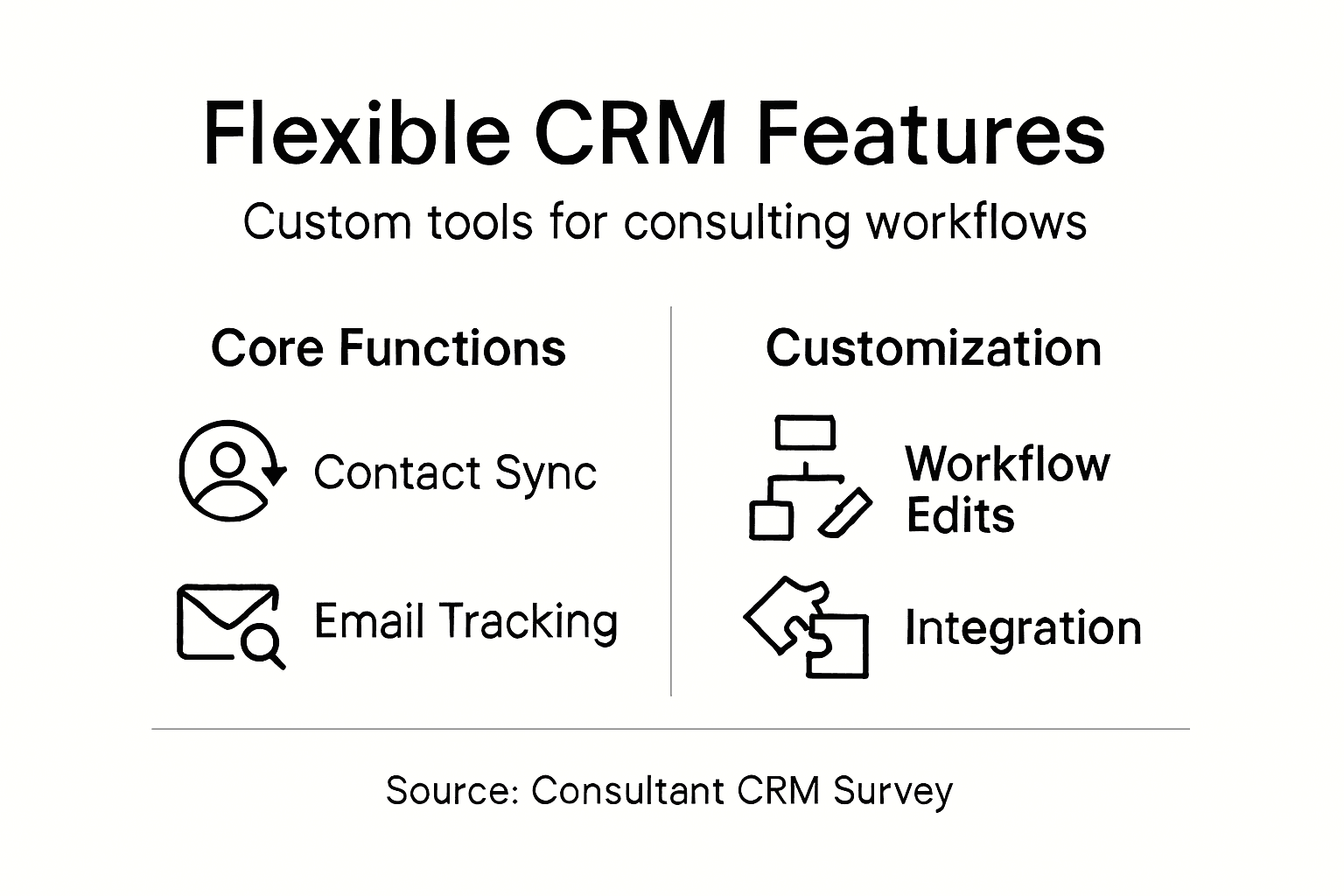
Pro tip: Start by mapping out your current client management workflow before selecting a CRM to ensure you choose a system that genuinely matches your specific operational needs.
Choosing the Right CRM Platform
Selecting the ideal CRM platform requires a strategic approach that goes beyond basic feature comparisons. Consultants and coaches must evaluate tools that not only manage client data but also align with their unique business workflows and growth objectives.
When assessing potential CRM solutions, professionals should focus on critical platform selection criteria. Key considerations include:
- Customization capabilities for different consulting niches
- Robust client interaction tracking
- Intuitive user interface
- Scalability and pricing flexibility
- Integration with existing business tools
- Automated reporting and analytics
Performance metrics play a crucial role in CRM selection. The right platform should provide actionable insights that help consultants understand client engagement patterns, track sales pipelines, and optimize communication strategies. Detailed reporting features enable data-driven decision-making, transforming raw client information into strategic business intelligence.
Beyond technical specifications, cultural fit matters significantly. A CRM should feel like an extension of your professional practice, simplifying complex administrative tasks while maintaining the personalized touch that defines successful consulting relationships. Look for platforms that offer seamless user experiences, minimal learning curves, and responsive customer support.
Pro tip: Request free trials from multiple CRM platforms and systematically test each solution using your actual client management scenarios to ensure genuine operational compatibility.
Essential CRM Features for Consultants
Successful consultants require sophisticated CRM functionality that goes beyond basic contact management. A comprehensive platform should act as a strategic partner, transforming client interactions from administrative tasks to growth opportunities.
Consultants need comprehensive CRM features that streamline their unique workflow. Essential capabilities include:
- Intelligent lead prioritization
- Automated follow-up scheduling
- Detailed client communication tracking
- Customizable deal pipeline management
- Real-time performance analytics
- Seamless tool integration
- Mobile accessibility for on-the-go professionals
Workflow automation represents a critical differentiator for modern consulting CRMs. These platforms should intelligently reduce administrative overhead, allowing professionals to focus more time on high-value client interactions and strategic business development. Advanced CRMs use machine learning to predict client needs, recommend communication strategies, and identify potential growth opportunities.

The most effective CRM solutions recognize that consulting is fundamentally about relationships. They provide nuanced tools that capture not just transactional data, but the subtle contextual information that transforms good client management into exceptional client experiences. Look for platforms that offer deep customization, allowing you to map your unique consulting approach directly into the software’s architecture.
Here’s how popular CRM features impact consulting practices:
| CRM Feature | Practical Impact | Benefit for Consultants |
|---|---|---|
| Custom dashboards | Visualizes key metrics fast | Enhances decision-making speed |
| Automated workflows | Reduces repetitive tasks | Lets you focus on client work |
| Client history logs | Tracks interaction details | Improves client retention rates |
| Reporting analytics | Provides actionable insights | Drives growth and strategic moves |
Pro tip: Conduct a comprehensive workflow audit before selecting a CRM to ensure the platform can be precisely tailored to your specific consulting methodology and client engagement model.
Integrating CRM With Consulting Workflows
Successful CRM integration requires more than simply plugging software into existing processes. Strategic workflow alignment transforms CRM from a passive tracking tool into an active business development engine that supports every aspect of a consultant’s professional practice.
Consultants must approach CRM integration through a systematic lens, focusing on data quality management processes that ensure seamless information flow. Critical integration strategies include:
- Mapping existing client interaction workflows
- Identifying manual process bottlenecks
- Establishing clear data entry protocols
- Creating standardized communication templates
- Developing automated follow-up sequences
- Implementing comprehensive reporting mechanisms
Workflow automation represents the cornerstone of effective CRM integration. By designing systems that automatically capture client interactions, track communication history, and generate insights, consultants can shift from reactive administrative work to proactive strategic engagement. The goal is creating a fluid ecosystem where technology amplifies human relationship-building capabilities instead of replacing them.
Technical integration goes beyond software configuration. It demands a holistic approach that considers the unique nuances of consulting practice, ensuring that the CRM becomes an intuitive extension of the professional’s working style. This means customizing dashboards, creating personalized communication flows, and developing intelligent triggers that support individual consulting methodologies.
Comparing CRM integration approaches for consultants:
| Approach | Implementation Complexity | Best Use Cases |
|---|---|---|
| Manual setup | Low | Small teams, limited automation |
| Custom configuration | Medium | Niche consulting needs |
| Advanced automation | High | Fast-growing or multi-user firms |
Pro tip: Conduct a comprehensive workflow mapping exercise before CRM implementation, documenting every client touchpoint to ensure your selected platform can be precisely configured to your specific consulting approach.
Common CRM Mistakes and How to Avoid Them
Many consultants unknowingly sabotage their business potential by mishandling Customer Relationship Management systems. Understanding and avoiding common pitfalls can transform CRM from a frustrating administrative tool into a powerful strategic asset.
Consultants frequently fall into predictable traps when implementing CRM platforms, with critical implementation mistakes threatening their operational efficiency. The most significant errors include:
- Inadequate system customization
- Poor data management practices
- Neglecting comprehensive user training
- Underutilizing advanced platform features
- Failing to integrate CRM with existing workflows
- Inconsistent data entry protocols
- Overlooking regular system performance reviews
Data integrity represents the foundation of effective CRM usage. Consultants must develop rigorous processes that ensure every piece of client information is accurately captured, consistently updated, and strategically leveraged. This means creating standardized data entry templates, establishing clear ownership of data management responsibilities, and implementing regular data quality audits.
Successful CRM adoption requires a cultural shift within a consulting practice. It’s not just about implementing software, but about creating a systematic approach to client relationship management that empowers professionals to work smarter, not harder. The most effective consultants view their CRM as a dynamic intelligence platform that grows and adapts with their business, rather than a static record-keeping system.
Pro tip: Designate a dedicated CRM champion within your organization who can drive consistent adoption, provide ongoing training, and continuously optimize your system’s configuration.
Elevate Your Consulting Practice with Strategic CRM Mastery
The article highlights the critical challenge consultants and coaches face when managing complex client workflows and the overwhelming administrative burden that can hinder growth. It emphasizes the need for customizable CRM solutions that transform client data into strategic business intelligence while automating repetitive tasks. If you recognize the pain of juggling client relationships, struggling with data integrity, or missing out on automated follow-ups and insightful reporting this is your opportunity to create scalable success without burnout.
At Freedom Sun we specialize in empowering service-based entrepreneurs to move beyond hustle culture by mastering strategic systems and mental resilience. Our interactive training and diagnostic assessments teach you how to build a robust client management architecture aligned with your unique consulting workflow. Discover how to reduce administrative overload and gain control over your business ecosystem through proven methodologies. Start your journey toward profitable peace and scalable leadership today by exploring how we help coaches and consultants streamline client success with intentional system design on our Freedom Sun website. Take action now and transform your CRM struggles into a strategic advantage with Freedom Sun training. Ready to lead your practice with confidence and clarity Join the community at Freedom Sun and make system mastery your competitive edge.
Frequently Asked Questions
What is CRM for consultants and coaches?
CRM for consultants and coaches is a strategic approach to managing client interactions, data, and workflows. It helps service-based professionals streamline their client management processes, focusing on maintaining personalized relationships.
What are the essential features to look for in a CRM for consulting?
Key features to consider include lead management, sales pipeline visualization, automated follow-up scheduling, client communication tracking, and performance analytics. These functionalities help enhance client engagement and simplify operational tasks.
How can a CRM improve my consulting workflow?
A CRM can automate administrative processes, track client interactions in real-time, and provide actionable insights. This allows you to focus more on high-value client relationships and strategic growth opportunities, ultimately improving efficiency.
What common mistakes should I avoid when implementing a CRM?
Some common mistakes include inadequate system customization, poor data management practices, neglecting user training, and failing to integrate the CRM with existing workflows. Avoiding these pitfalls can lead to more effective use of the CRM and better client outcomes.
Recommended
- Sustainable Business Scaling Guide for Lasting Success
- Profitability Optimization Guide for Lasting Business Growth
- 7 Proven Wealth-Building Strategies for Founders
- 7 Steps to a Reliable Financial Systems Checklist for Founders
- Role of Forms on Websites: Powering Business Growth - ResponsiveWebsiteDesign