How to close sales without being pushy: empathetic strategies

TL;DR:
- Empathy and genuine connection create effective, non-pushy sales that foster trust and loyalty.
- Consultative techniques focus on understanding client needs through strategic questions and active listening.
- Giving clients space to decide leads to stronger relationships, referrals, and long-term business growth.
Somewhere along the way, sales got a bad reputation. Many women entrepreneurs hold back from closing because they associate it with pressure, manipulation, or making clients uncomfortable. But empathy, preparation, and genuine connection are actually more effective than any aggressive tactic. The truth is, you do not have to choose between being kind and being effective. This article walks you through the mindset shifts, consultative techniques, and practical scripts that let you close with confidence, integrity, and zero pushiness.
Table of Contents
- Rethinking the sales closing mindset
- Mastering consultative techniques to build trust
- Leveraging empathy and relationship building
- Practical frameworks and scripts for non-pushy closing
- Why non-pushy closing works better in the long run
- Grow your sales with Freedom Sun
- Frequently asked questions
Key Takeaways
| Point | Details |
|---|---|
| Empathy over pressure | Sales success comes from genuine listening and understanding, not aggressive closing. |
| Consultative approach wins | Ask insightful questions and tailor solutions to client needs to build trust and close deals naturally. |
| Relationship-driven growth | Strong client relationships lead to more repeat business and referrals than forceful tactics. |
| Scripts and frameworks help | Having practical phrases and closing frameworks ready keeps sales conversations comfortable and effective. |
Rethinking the sales closing mindset
Most traditional sales training was built around urgency, pressure, and the idea that a great closer never takes no for an answer. That model was not designed for how you naturally build relationships. And honestly, it was not designed for the kind of business you want to run.
The shift starts when you stop thinking about closing a deal and start thinking about opening a relationship. When your goal is to serve the person in front of you, the whole conversation changes. You ask better questions. You listen more. You stop rehearsing your pitch and start paying attention to what your client actually needs.
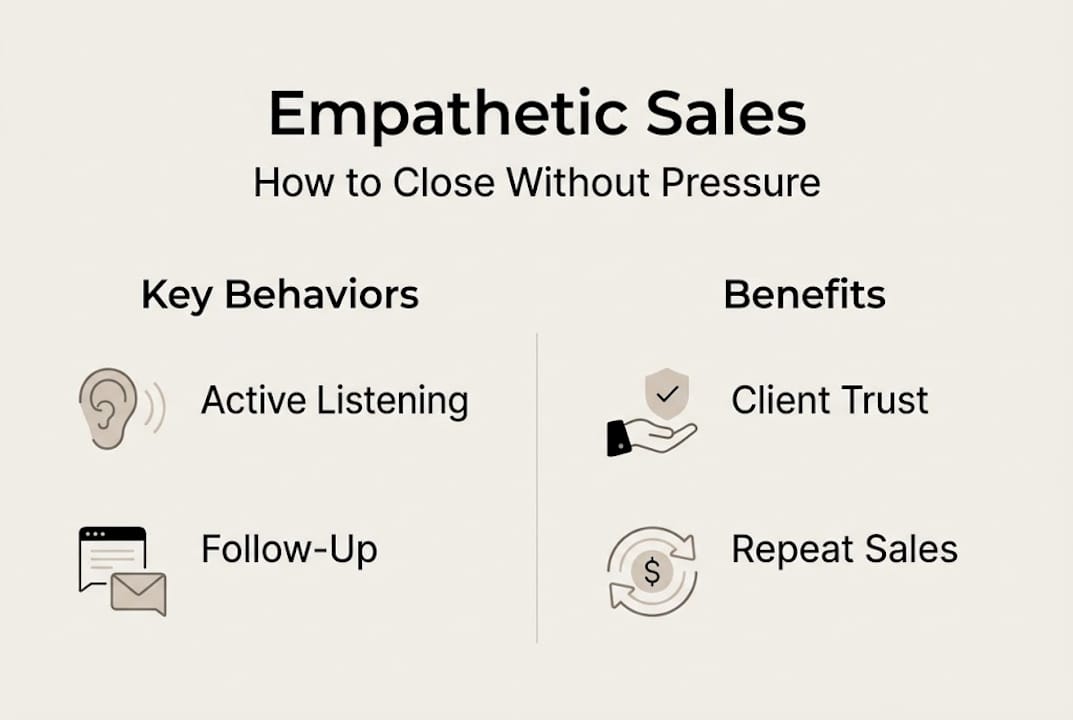
This is what a consultative sales mindset looks like in practice. It is not passive. It is not weak. It is deeply strategic, because clients who feel understood are far more likely to say yes, and far more likely to come back.
Here are the core beliefs that non-pushy closers carry into every conversation:
- Closing is an act of service, not a performance
- The right client will say yes when they feel safe, not when they feel pressured
- A no today does not mean a no forever
- Silence is a tool, not a failure
- Referrals come from relationships, not transactions
Fear of rejection is real. Fear of coming across as aggressive is real too, especially for women who have been socialized to prioritize harmony. But here is what is actually true: the discomfort you feel about asking for the sale is a nervous system response, not a signal that you are doing something wrong.
Women entrepreneurs close more confidently by leveraging empathy and genuine connection rather than pressure tactics. Clients who feel genuinely heard are significantly more likely to buy and to refer others.
When you adopt sustainable sales strategies rooted in trust, you are not just closing one deal. You are building a business that grows through word of mouth, loyalty, and real relationships. That compounds over time in ways that no aggressive tactic ever could.
Mastering consultative techniques to build trust
Consultative selling is not a soft alternative to real selling. It is the most effective form of selling available to service-based entrepreneurs. The entire approach is built around understanding your client so well that your offer becomes the obvious next step.
Here is a simple framework for a consultative sales conversation:
- Prepare deeply. Before any sales conversation, research your client. Know their business, their challenges, and what success looks like for them. Walk in informed.
- Ask insightful questions. Open with curiosity, not a pitch. Questions like “What has been your biggest challenge in this area?” or “What does success look like for you six months from now?” open the door to real conversation.
- Listen without interrupting. Let your client finish their thoughts. Resist the urge to jump in with solutions. The best insights come when people feel safe enough to keep talking.
- Propose value, not features. When you do present your offer, frame it around their specific situation. “Based on what you shared, here is how I think this would help you” lands very differently than a generic pitch.
Deep client understanding and consultative questioning are what separate confident closers from those who rely on pressure. When your client feels genuinely understood, resistance drops naturally.
Pro Tip: Silence is one of the most underused tools in sales. After you ask a question or present your offer, stop talking. Give your client space to think. Most people rush to fill silence because it feels uncomfortable, but that silence is where your client processes and decides. Let it breathe.
Here is how consultative and transactional closing compare:
| Behavior | Consultative closing | Transactional closing |
|---|---|---|
| Focus | Client needs and goals | Making the sale |
| Questions asked | Deep, open-ended | Minimal or scripted |
| Listening style | Active, patient | Selective |
| Relationship impact | Long-term trust | One-time interaction |
| Outcome | Referrals and repeat clients | Single purchase |
Practicing building client trust through these gentle sales conversations is not just good ethics. It is good business. Clients who feel respected at the sales stage become your most loyal advocates.
Leveraging empathy and relationship building
Empathy is not just a soft skill. It is a sales accelerator. When a client feels that you genuinely understand their situation, their defenses come down. They stop evaluating you and start trusting you. That shift is where sales happen naturally.

Sales resistance is almost always rooted in fear: fear of making the wrong decision, fear of wasting money, fear of being sold something that does not deliver. Empathy dissolves that fear because it signals safety. You are not here to take something. You are here to help.
Here are practical ways to show empathy throughout your sales process:
- Validate concerns out loud. When a client hesitates, say “That makes complete sense” before you respond. It signals that you heard them.
- Recall personal details. Reference something they mentioned in a previous conversation. It shows you were paying attention, not just waiting for your turn to talk.
- Customize your follow-up. Send a message that reflects the specific conversation you had, not a generic template. This small act communicates respect.
- Mirror their language. Use the words and phrases your client uses to describe their problem. It creates instant resonance.
- Ask how they are feeling, not just what they are thinking. Decisions are emotional. Acknowledging the emotional layer builds deeper trust.
Active listening means more than staying quiet. It means reflecting back what you hear. Phrases like “What I am hearing is…” or “It sounds like the biggest concern is…” show your client that you are processing what they share, not just waiting to respond.
Pro Tip: After a sales conversation, send a short follow-up that summarizes what you discussed and what the next step is. Keep it warm and specific. Something like “I loved our conversation today. Based on what you shared about [specific detail], I think [offer] could really support you. Here is what the next step looks like when you are ready.” This feels like support, not pressure.
Empathy, listening, and relationship focus are what drive repeat business and referrals. Your client relationship strategies and your CRM for strong client connections are not separate from your sales process. They are the sales process.
Practical frameworks and scripts for non-pushy closing
Knowing the principles is one thing. Having the actual words is another. Here are ready-to-use questions and frameworks you can bring into your next sales conversation.
Non-pushy questions that invite a decision:
- “What would make this a great experience for you?”
- “What else do you need to feel comfortable moving forward?”
- “Is there anything holding you back that we have not talked about yet?”
- “How does this feel so far?”
- “What would the next step look like for you?”
These questions work because they put the client in the driver’s seat. You are not pushing toward a yes. You are creating space for an honest answer, which is far more useful.
Positive body language and thoughtful conversation are just as important as the words you use. Here is a quick reference:
| Posture or cue | Effect on client | When to use |
|---|---|---|
| Open arms, relaxed shoulders | Signals safety and openness | Throughout the conversation |
| Leaning slightly forward | Shows engagement and interest | When client is sharing |
| Nodding slowly | Communicates understanding | While listening |
| Maintaining soft eye contact | Builds trust and presence | During key moments |
| Mirroring client’s energy | Creates rapport | Especially at the start |
Here is a simple, pressure-free closing script you can adapt:
*“Based on everything you have shared today, I really believe [offer] could help you with [specific challenge]. I do not want to rush you into anything. If it feels right, I would love to move forward together. And if you need more time or have questions, I am completely open to that too. What feels right for you?” *
When a client says no, do not disappear. Thank them sincerely, express that you respect their decision, and leave the door open. Something like “I completely understand. If anything changes or you want to revisit this, please reach out. I would love to support you when the timing is right” keeps the relationship intact. Many of the best clients come back after a no, because you handled it with grace. Check out these low-stress closing tips for more scripts and frameworks.
Why non-pushy closing works better in the long run
Here is something the traditional sales world does not talk about enough: the best clients almost always need space to decide. Pressure might manufacture a yes in the short term, but it rarely creates a loyal client. What it creates is buyer’s remorse, refund requests, and someone who does not refer you to anyone.
When you give clients room to breathe, something different happens. They feel respected. They make a decision they own. And when they say yes from that place, they show up differently as a client. They are more engaged, more committed, and more likely to tell others about you.
The slow close often leads to the biggest wins. Not because you waited passively, but because you built enough trust that the decision felt easy and obvious for your client.
Non-pushy selling consistently generates stronger long-term sales growth because it creates advocates, not just buyers. Pressure closes one deal. Trust closes a hundred.
Aggressive tactics also carry a hidden cost: negative word of mouth. One client who felt pressured will tell five people. One client who felt genuinely supported will tell ten. Your reputation is built in those moments.
Grow your sales with Freedom Sun
If this approach resonates with you, you are already thinking like the women inside the Freedom Sun community. The strategies in this article are not just theory. They are the foundation of how we teach sales inside the Women’s Wealth Collective, because we know that sustainable revenue comes from trust, not pressure.
Freedom Sun was built for women entrepreneurs who are already generating revenue and are ready to grow without burning out or compromising who they are. If you are ready to close with confidence, build real client relationships, and create sales without burnout, explore what Freedom Sun has to offer. Your next level does not require you to become someone you are not.
![cta_image]
Frequently asked questions
How do I stop feeling guilty about asking for the sale?
Reframe closing as helping your client get what they truly need. When empathy drives your close, asking for the sale becomes an act of service, not pressure.
What if a client says no — how should I respond?
Thank them genuinely, keep the relationship warm, and follow up respectfully if the timing changes. Empathy and relationship building mean a no today can become a yes later.
Are non-pushy sales techniques less effective than traditional methods?
Not at all. Empathy-based approaches consistently produce higher trust, stronger client retention, and more referrals than aggressive tactics over time.
What is one thing I can do today to be less pushy in sales?
Ask one more question before presenting your offer, then listen fully. Consultative questioning shifts the entire dynamic from selling to serving.