Role of Automation in Entrepreneurship Success

Nearly 60 percent of American entrepreneurs say automation is the single biggest shift shaping their daily operations. As digital tools replace manual workflows, it becomes clear that smart automation is more than a tech trend. It is transforming how American business owners build competitive strategies, cut repetitive work, and reclaim valuable time for innovation. Discover how understanding and leveraging automation can set your business up for greater efficiency and growth.
Table of Contents
Key Takeaways
PointDetailsAutomation as a Competitive AdvantageEntrepreneurs should leverage automation to enhance operational efficiency and redirect their focus towards high-value strategic tasks.Types of Automation SystemsUnderstanding various automation systems like RPA, IA, and BPMS helps entrepreneurs make informed decisions on which to implement.Implementation ChallengesEntrepreneurs must be prepared to face challenges such as technological complexity and cultural resistance during automation implementation.Risk MitigationDeveloping a phased automation implementation plan with clear evaluation metrics can help manage risks and unexpected challenges effectively.
Defining Automation for Entrepreneurs Today
Automation represents a strategic transformation in how entrepreneurs build, operate, and scale their businesses. More than just technological implementation, it’s a fundamental reimagining of operational processes through intelligent systems and workflows. The Solo Revolution research demonstrates how artificial intelligence technologies are dramatically expanding individual entrepreneurial capabilities.
At its core, automation for modern entrepreneurs involves systematically replacing manual, repetitive tasks with intelligent technological solutions that operate consistently and efficiently. These solutions range from simple workflow tools to complex AI-driven platforms that can analyze data, make predictive recommendations, and execute complex decision trees without constant human intervention. Generative AI research highlights how digital transformation is fundamentally reshaping entrepreneurial strategic approaches.
Entrepreneurs today recognize automation as a critical competitive advantage. Key areas of implementation typically include:
Customer relationship management
Financial tracking and reporting
Marketing and sales funnel optimization
Inventory and supply chain management
Communication and collaboration workflows
The strategic application of automation allows entrepreneurs to redirect human creativity and energy toward high-value strategic activities that genuinely require human insight and innovation. By systematically identifying and automating routine processes, business leaders can dramatically increase operational efficiency while reducing cognitive overhead.
Pro Tip: Strategic Automation Assessment: Spend two hours mapping your current business processes and identify three repetitive tasks that could be automated with existing technologies, focusing first on activities that consume significant time but require minimal complex decision-making.
Key Types of Business Automation Systems
Business automation systems represent a strategic spectrum of technological solutions designed to streamline operational processes and enhance organizational efficiency. Comprehensive research comparing business process automation strategies reveals multiple sophisticated approaches entrepreneurs can leverage to transform their operational capabilities.
The primary categories of business automation systems include:
Robotic Process Automation (RPA): Software robots that execute repetitive digital tasks with high precision and consistency
Intelligent Automation (IA): Advanced systems combining RPA with artificial intelligence and machine learning capabilities
Business Process Management Systems (BPMS): Comprehensive platforms that map, analyze, and optimize entire workflow sequences
Digital Process Automation (DPA): Technologies focused on digitizing and streamlining complex business workflows
AI-Driven Automation: Cutting-edge solutions that use predictive algorithms to make autonomous strategic decisions
Each automation system offers unique advantages for entrepreneurs. RPA excels at handling structured, rule-based tasks with minimal human intervention. Intelligent Automation goes further by incorporating cognitive capabilities that can adapt and learn from process variations. Business Process Management Systems provide holistic views of organizational workflows, enabling leaders to identify inefficiencies and redesign processes for maximum effectiveness.
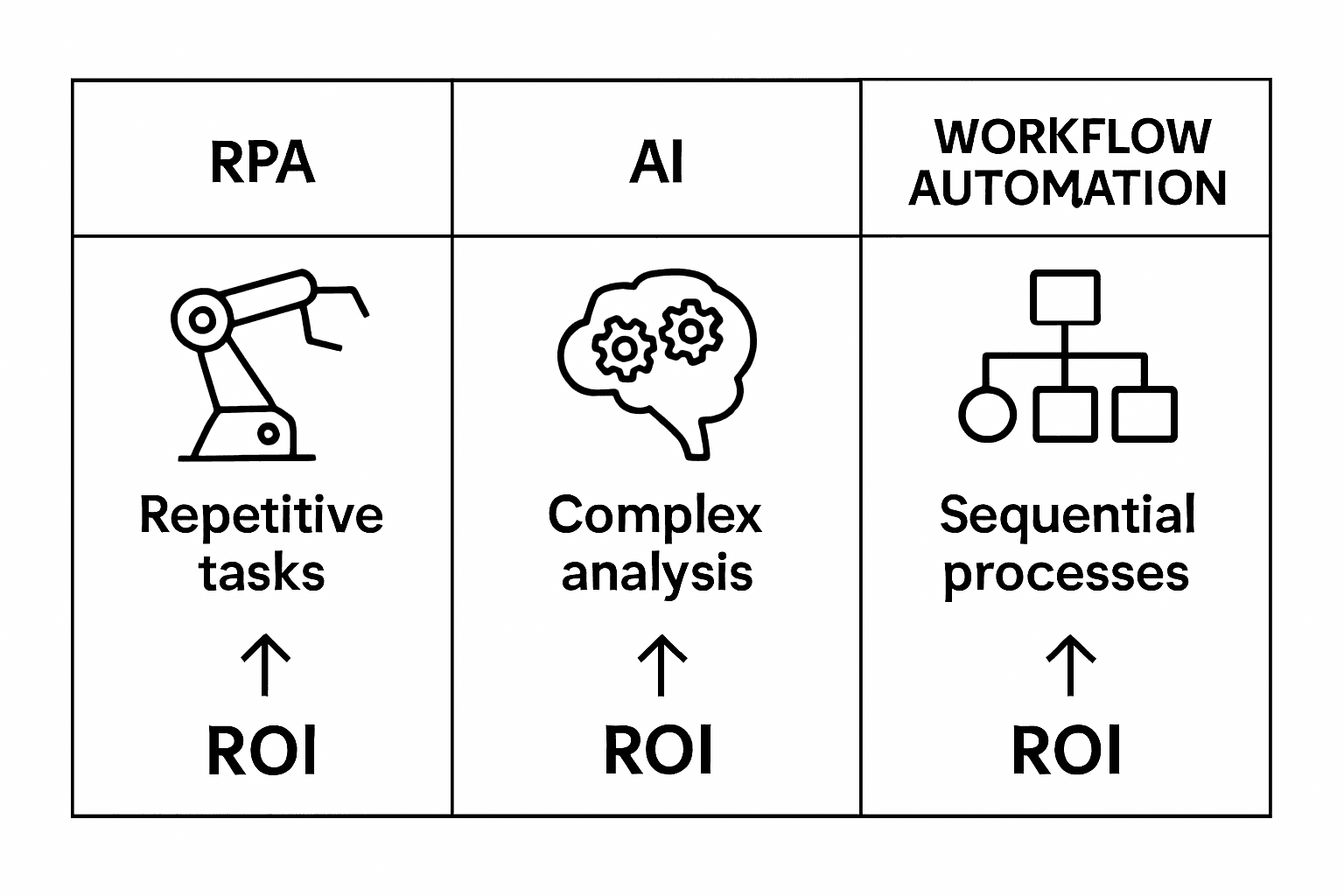
Here’s how leading automation system types compare for entrepreneurial use:
System TypeBest Use CaseHuman InvolvementTypical ROI TimelineRobotic Process AutomationData entry and routine reportingMinimal once configured3-12 monthsIntelligent AutomationAdaptive workflows, analyticsSome supervision for learning6-18 monthsBPMSEnd-to-end process improvementOngoing management6-24 monthsDigital Process AutomationComplex, multistep coordinationModerate, process oversight6-18 monthsAI-Driven AutomationPredictive decision-makingExpert input for setup12-24+ months
Entrepreneurs must carefully evaluate their specific operational requirements to select the most appropriate automation system. The goal isn’t wholesale replacement of human workers, but strategic augmentation that allows team members to focus on high-value creative and strategic activities that drive business growth.
Pro Tip Strategic Automation Selection: Conduct a comprehensive audit of your current business processes, identifying repetitive tasks that consume significant time, then match those tasks to the most appropriate automation system type for maximum efficiency and return on investment.
How Automation Transforms Entrepreneurial Operations
The impact of automation on entrepreneurial operations reveals a profound strategic transformation that fundamentally reshapes how businesses design, execute, and scale their core functions. Modern entrepreneurs are discovering that automation is not merely a technological upgrade, but a comprehensive reimagining of operational efficiency and strategic potential.
Automation transforms entrepreneurial operations across multiple critical dimensions:
Operational Efficiency: Dramatically reducing time spent on repetitive tasks
Decision Making: Providing real-time data insights and predictive analytics
Resource Allocation: Optimizing human capital by redirecting talent toward strategic initiatives
Scalability: Creating infrastructure that can seamlessly expand without proportional increases in complexity
Customer Experience: Enabling personalized, rapid, and consistent service interactions
The most significant operational transformations occur when entrepreneurs integrate intelligent automation systems that can learn, adapt, and optimize processes dynamically. These systems go beyond simple task replacement, creating adaptive workflows that evolve with business needs. By implementing sophisticated automation, entrepreneurs can build organizations that are not just efficient, but genuinely intelligent and responsive.

Entrepreneurs who successfully leverage automation create a competitive advantage that transcends traditional operational boundaries. They build organizations capable of making data-driven decisions at unprecedented speeds, with reduced human error and maximized strategic flexibility. The key is viewing automation not as a replacement for human creativity, but as a powerful amplification of human potential.
Pro Tip Automation Integration Strategy: Conduct a comprehensive workflow audit, identifying three to five repetitive processes that consume significant time, then research specific automation tools designed to streamline those exact operational bottlenecks.
Navigating Implementation Challenges and Solutions
Research investigating technology transfer mechanisms reveals that automation implementation is not a straightforward process, but a complex strategic journey requiring careful planning and nuanced execution. Entrepreneurs face multiple interconnected challenges that demand sophisticated, multilayered solutions.
The primary implementation challenges include:
Technological Complexity: Understanding and integrating diverse automation systems
Skill Gap: Developing appropriate technical capabilities within existing teams
Cultural Resistance: Overcoming organizational hesitation toward technological transformation
Financial Investment: Managing initial implementation costs and long-term ROI expectations
Change Management: Designing smooth transition strategies that minimize operational disruption
Innovative approaches like no-code and low-code automation platforms are emerging as powerful solutions to address technological barriers. These platforms enable entrepreneurs with limited programming expertise to design and implement sophisticated automation workflows using intuitive, natural language interfaces. By reducing the technical complexity traditionally associated with automation, these tools democratize technological innovation and make advanced systems accessible to a broader range of businesses.
Successful automation implementation requires a holistic approach that balances technological sophistication with human adaptability. Entrepreneurs must view automation not as a replacement for human talent, but as a strategic amplification of existing capabilities. This means investing in comprehensive training programs, fostering a culture of continuous learning, and creating clear communication channels that help teams understand the strategic value of technological transformation.
Below is a summary comparing key implementation challenges and modern solutions:
ChallengePotential RiskModern SolutionTechnological ComplexityDelayed projects, integration errorsLow-code/no-code platformsSkill GapSuboptimal system usageUpskilling and targeted trainingCultural ResistanceReduced adoption and moraleChange management workshopsFinancial InvestmentSlow or negative ROIPhased rollouts, pilot projectsChange ManagementWorkflow disruptionClear communication strategy
Pro Tip Automation Readiness Assessment: Conduct a comprehensive organizational skills audit, identifying current technological capabilities and potential training needs, then develop a phased implementation strategy that prioritizes incremental learning and gradual system integration.
Avoiding Pitfalls: Costs, Risks, and Missteps
Robotic Process Automation research highlights critical strategic considerations entrepreneurs must navigate when implementing technological solutions. Automation is not a simple plug-and-play strategy, but a complex transformation requiring meticulous planning and comprehensive risk assessment.
The most significant pitfalls entrepreneurs encounter include:
Strategic Misalignment: Implementing automation without clear organizational objectives
Overinvestment: Committing excessive financial resources without proportional returns
Skill Inadequacy: Lacking necessary technical expertise for effective implementation
Cultural Resistance: Failing to manage team transitions and psychological barriers
Scalability Challenges: Choosing inflexible systems that cannot adapt to business evolution
Strategic research on automation-driven innovation management emphasizes the critical importance of developing an Innovation-Automation-Strategy Cycle. This approach requires entrepreneurs to view automation not as a standalone technological solution, but as an integrated strategic framework that continuously evolves with organizational needs.
Successful automation adoption demands a holistic approach that balances technological capabilities with human adaptability. Entrepreneurs must conduct thorough cost-benefit analyses, assess long-term scalability, and create robust change management strategies that address both technological and human dimensions of organizational transformation.
Pro Tip Risk Mitigation Strategy: Develop a phased automation implementation plan with clear evaluation metrics, allocating 20% of your initial budget for unexpected challenges and maintaining flexibility in your technological approach.
Unlock Entrepreneurial Success Through Strategic Automation and System Mastery
The article emphasizes the challenges entrepreneurs face in adopting automation effectively to reduce repetitive workload and fuel growth without burnout. Key pain points include overcoming technological complexity, cultural resistance, and aligning automation with strategic goals for operational efficiency and scalable leadership. By focusing on automation systems that augment rather than replace human creativity, entrepreneurs can transform their business operations while protecting their mental resilience and sustaining long-term profitability.
At Freedom Sun, we understand these challenges deeply. Our unique Operating System framework built on MATH, MECHANICS, and MIND pillars empowers founders to build automated financial clarity, robust sales infrastructure, and mental resilience. This systemic approach complements automation technologies by helping you architect seamless internal systems that remove bottlenecks and avoid costly missteps outlined in the article. Whether you are striving to optimize your financial processes or enhance leadership capabilities, we provide tailored interactive training and assessments designed for high-growth entrepreneurs.
Transform your entrepreneurial journey from hustling to strategic system ownership. Take control now and explore how to amplify your operational health and leadership strength with the Freedom Sun Operating System.
Discover how to conquer complexity and unlock sustainable wealth and peace in your business today.
Learn more about building robust systems and start your transformation journey.
Frequently Asked Questions
What is automation in entrepreneurship?
Automation in entrepreneurship refers to the systematic use of technological solutions to replace manual, repetitive tasks, enhancing operational efficiency and allowing entrepreneurs to focus on strategic activities that drive growth.
How can automation provide a competitive advantage for entrepreneurs?
Automation enables entrepreneurs to streamline processes such as customer relationship management, financial reporting, and marketing, allowing for quicker decision-making and optimal resource allocation, ultimately creating a significant competitive edge.
What are the main types of business automation systems?
The main types of business automation systems include Robotic Process Automation (RPA), Intelligent Automation (IA), Business Process Management Systems (BPMS), Digital Process Automation (DPA), and AI-Driven Automation, each offering unique benefits for improving efficiency and effectiveness.
What challenges do entrepreneurs face when implementing automation?
Challenges in automation implementation include technological complexity, skill gaps, cultural resistance, financial investment issues, and the need for effective change management strategies to ensure smooth transitions and successful integration.